Committing to a goal of fully eliminating road deaths and serious injuries and adopting a "Vision Zero" action plan to make progress toward that goal is a fairly standard practice of most forward-thinking city transportation departments. But a proposal to create a Vision Zero action plan and lay the groundwork for safety investments in one of Snohomish County's fastest-growing cities is running into roadblocks, amid a significant budget crisis at the City of Lynnwood.
A proposed resolution from Lynnwood Councilmember Robert Leutwyler, introduced last month, would have committed the city to a goal of eliminating fatal and serious injury traffic crashes by 2040. The resolution also directed city staff to create an action plan within a year to identify strategies to get there and calls for specific actions within four categories: Safe Speed, Safe Streets, Safety Culture, and Safety Collaboration.
These categories reflect the "Safe Systems" approach that has been adopted across multiple levels of government in the U.S., including at the Federal Highway Administration.
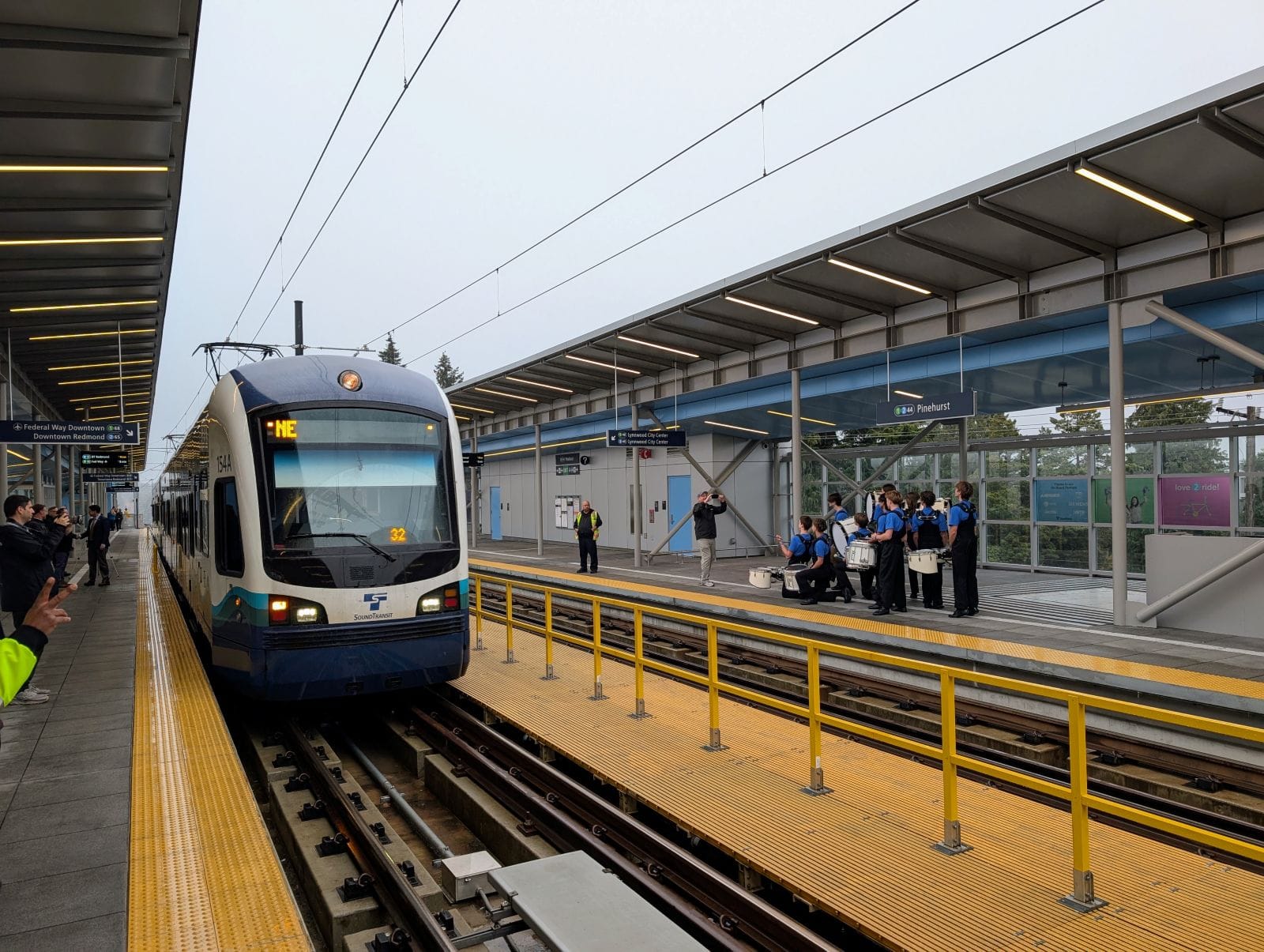
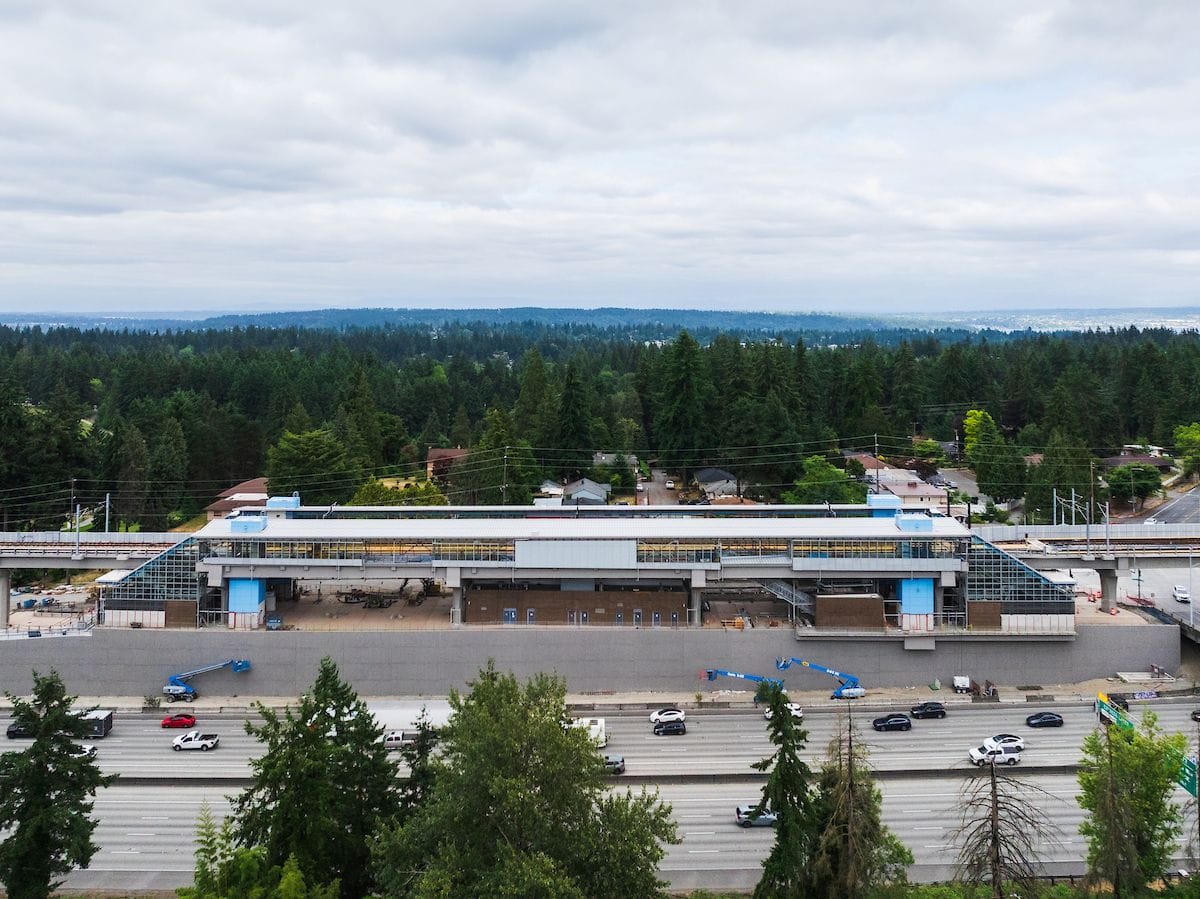
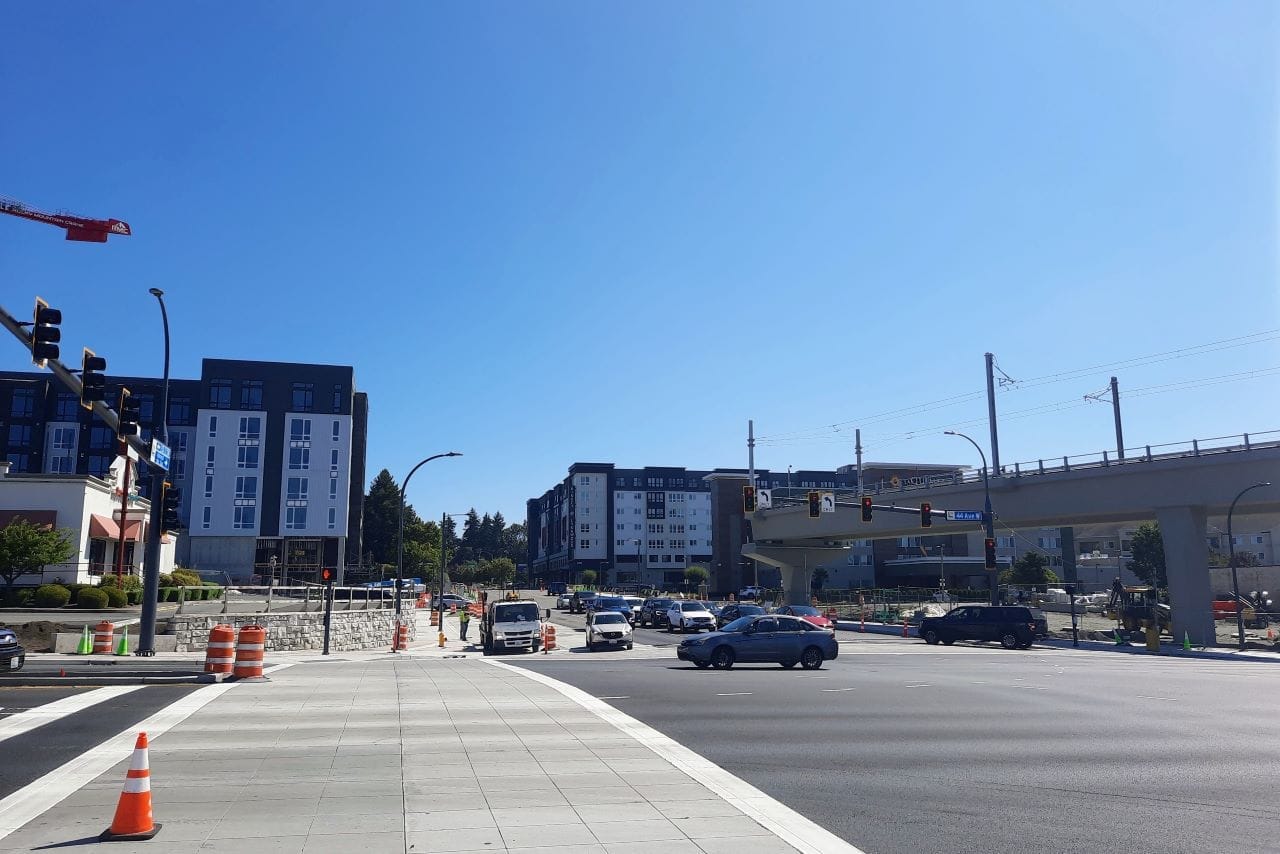
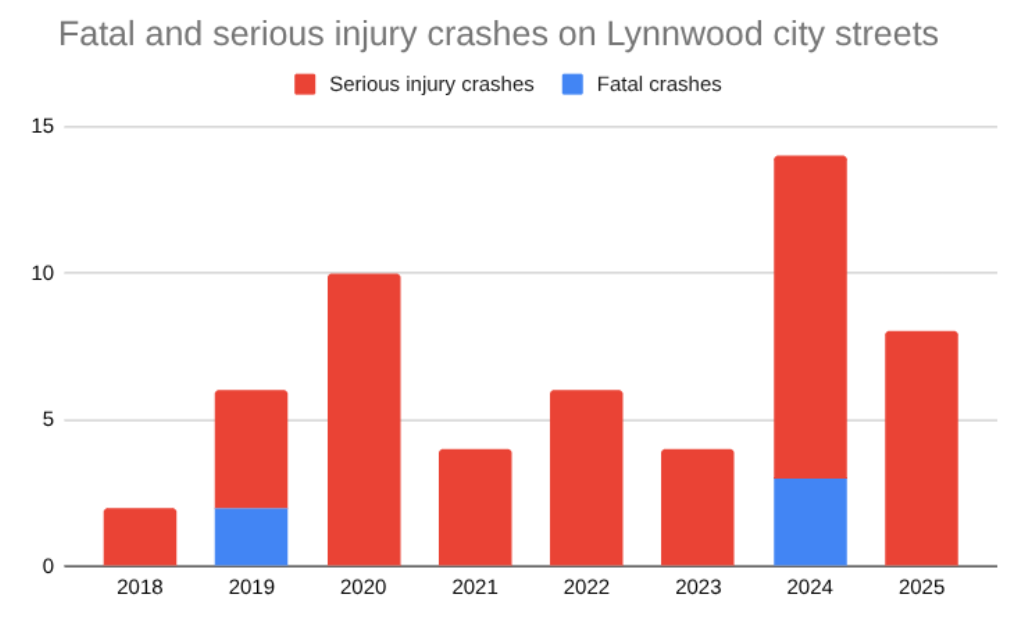
As a city of 43,000 residents, Lynnwood is ahead on traffic safety when it comes to some of its peer cities, at least when Pacific Highway – the portion of State Route 99 that cuts through the middle of the city – isn't included in the city's safety data. From 2020 to 2023, there were no fatal crashes on city streets in Lynnwood, although the city did see a spike in both fatal and serious injury crashes in 2024, the same year light rail arrived in the city. In 2026, the city has already seen one traffic fatality on city streets, along with at least two serious injury crashes.
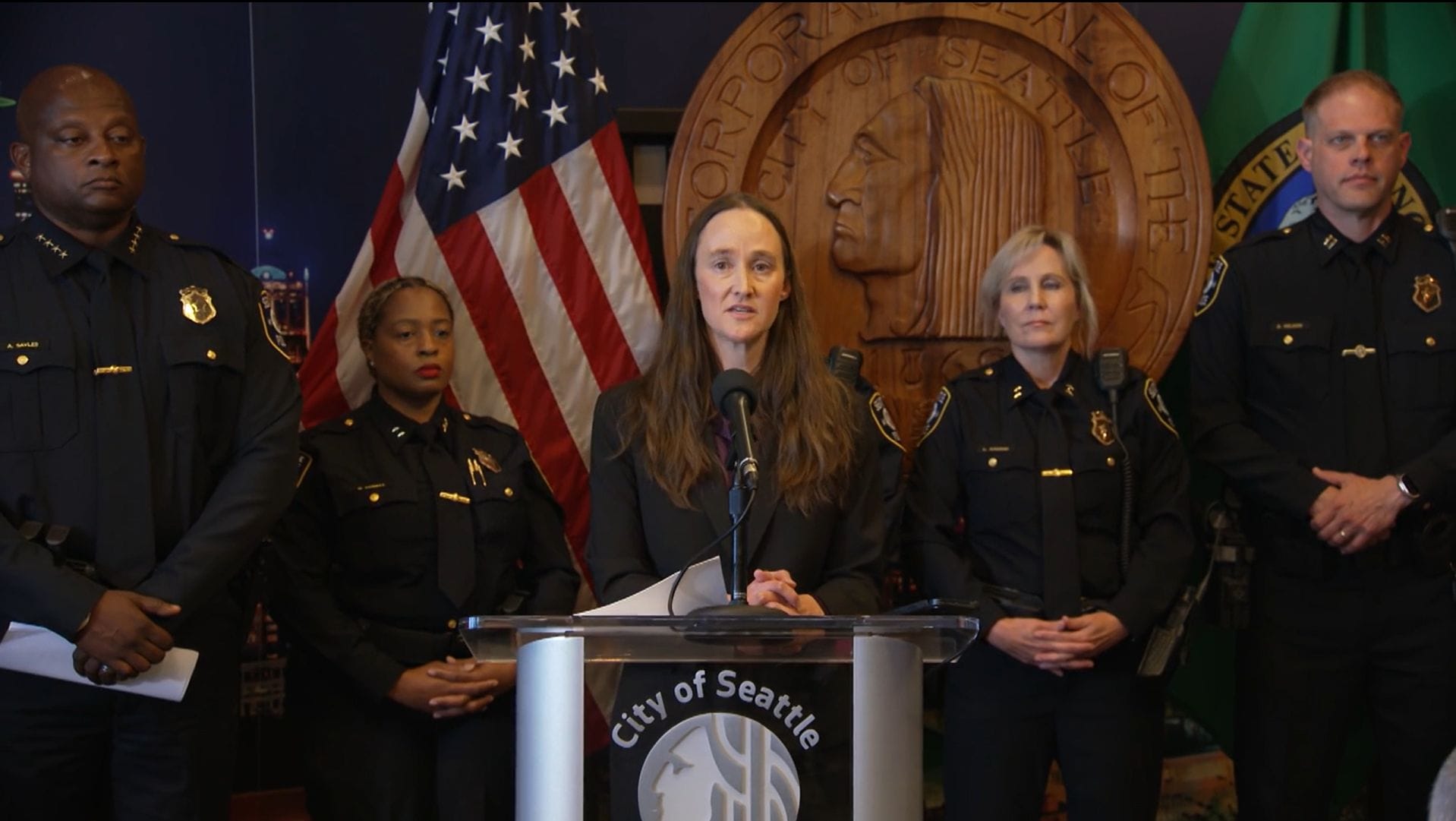
One could look at that safety record and conclude that Lynnwood doesn't have as far to go as other jurisdictions do in getting to zero deaths or serious injuries. During a July 15 discussion on Leutwyler's resolution, Assistant City Administrator Monisha Harrell threw some cold water on the idea of creating the action plan, downplaying its importance or urgency. Harrell, who started her job with the City of Lynnwood in May, had previously served as Director of the Office of Equity and Racial and Social Justice for King County and as a Deputy Mayor under former Seattle Mayor Bruce Harrell, her uncle.
One reason policymakers pushed back on the action plan was cost. Days after that discussion, Lynnwood Mayor George Hurst would make an announcement that the city's budget outlook was much worse than had initially been reported publicly, "primarily due to longstanding deficiencies in financial systems and processes." That news likely augers significant budget cuts on the horizon for the city.
But Harrell also offered several policy reasons why signing onto a Vision Zero commitment wasn't seen as an appropriate path for the city, including the fact that deaths on city streets are not as frequent as in other places.
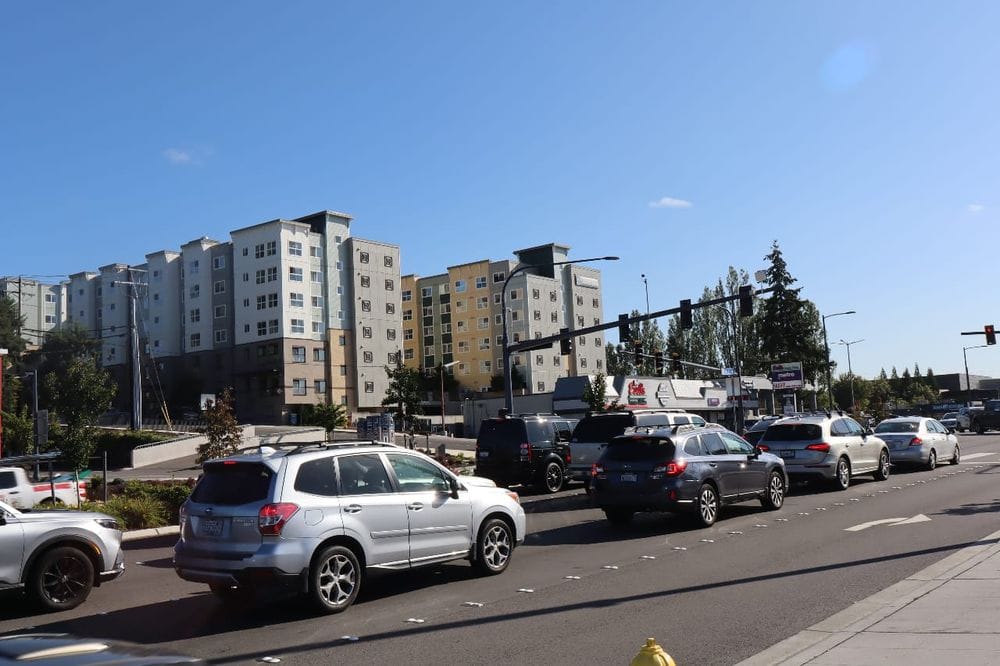
"In reviewing the data from the last 10 and a half years, we did have seven years where there were zero fatal crashes. So we are in a place where a lot of other Vision Zero communities would love to be," Harrell said. "The areas where we have had fatalities, and I talked to our police chief about this, a lot of those have involved things that you can't design out for in Vision Zero, which is: there's usually a nexus of bad driver capabilities, intoxication, other things that no matter how well you design the road, you can't really design out for those things."
Leutwyler, who was elected to the Lynnwood Council last year after being appointed to fill a vacancy, told The Urbanist that he disagreed with the administration when it came to the rationale offered against getting on board with Vision Zero.
"I don't see that as something that Vision Zero is not trying to solve for," Leutwyler said of distracted or impaired driving as a cause for traffic crashes. "[Vision Zero] talks about the fact that accidents are, in a large degree, inevitable, and so then, what can you do when an accident does occur? What can you do to lessen that blow?"
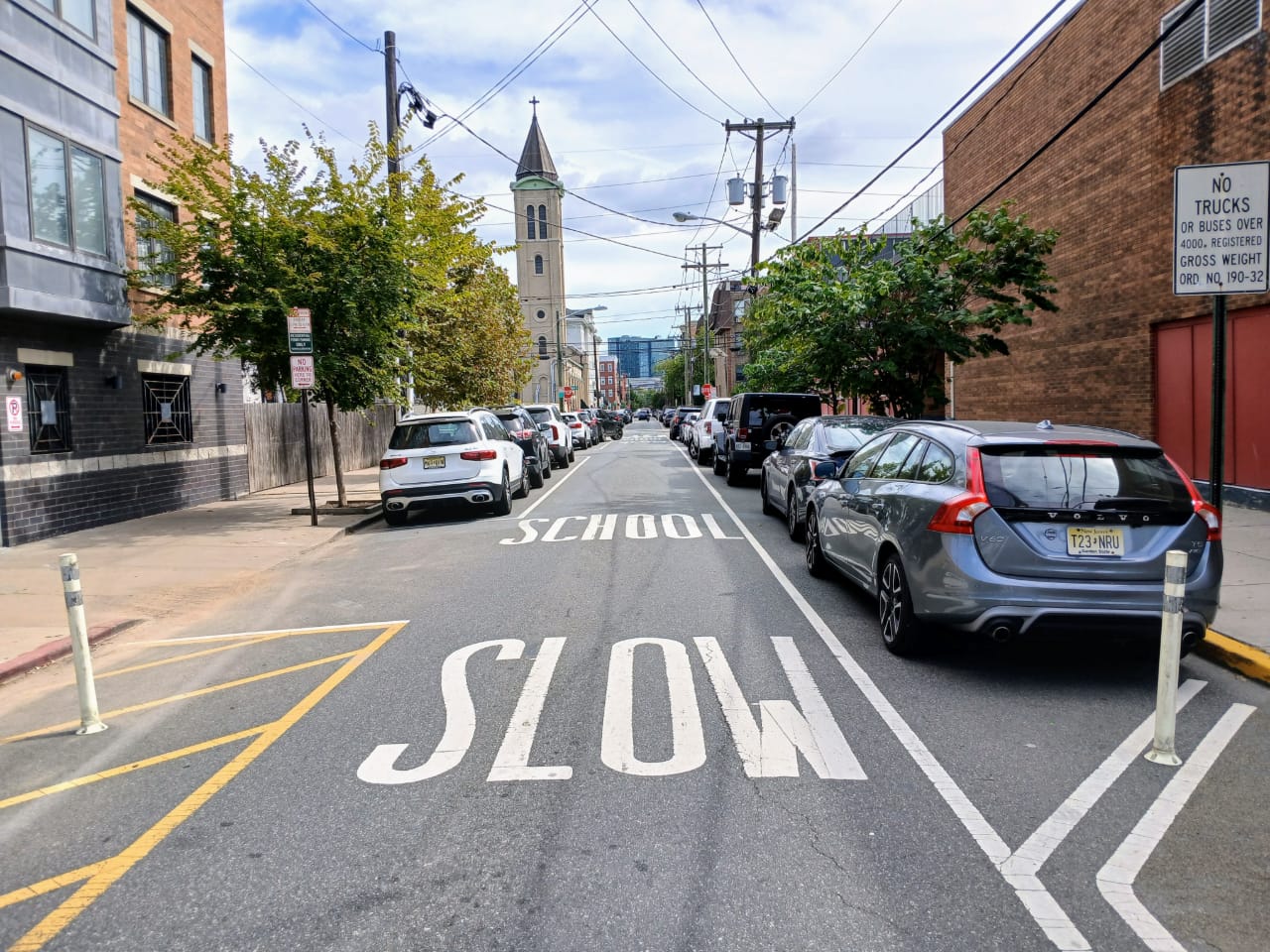
Cities of Lynnwood's size have seen success deploying safety interventions. Though there are distracted and intoxicated drivers in Hoboken, New Jersey, that city has not seen fatal crash in its borders since 2017, after embracing a Vision Zero approach that leans heavily on quick-build interventions. Intersections across the city now feature infrastructure intended to slow traffic and prioritize pedestrians.
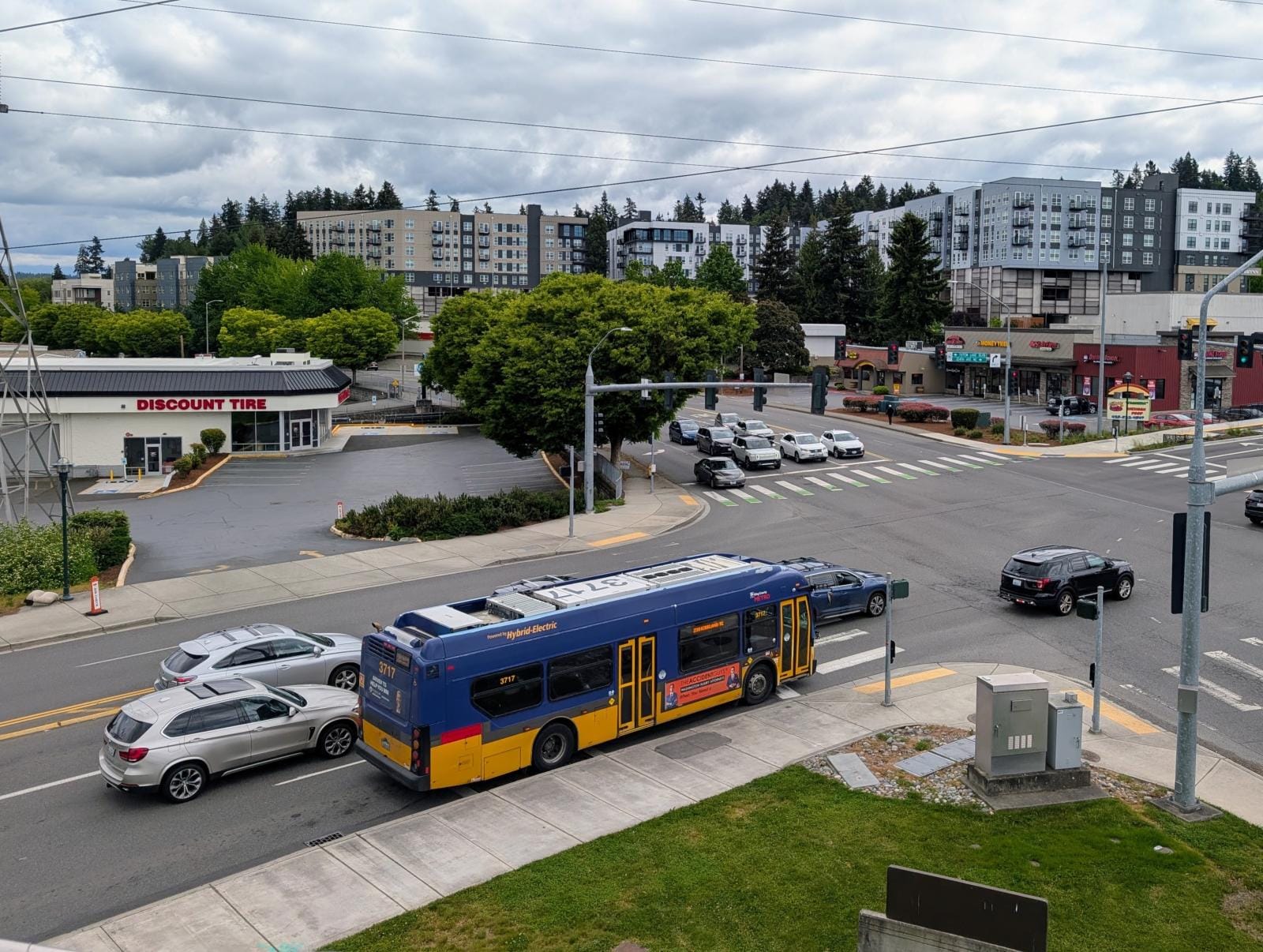
It's also not clear why the city shouldn't be playing a role in making it safer to use Pacific Highway, despite parts of the roadway being in control of the state. Nearby cities like Edmonds, Shoreline, and Seattle have all decided to tackle the issue of SR 99, to varying degrees of success. With the state highway included in the picture, where the city expects to see a significant portion of population growth in the coming years, Lynnwood's safety record looks significantly worse.
Meanwhile Lynnwood's biggest transportation spending priorities remain focused on roadway maintenance and managing congestion, with the recent revamp of 196th Street adding traffic capacity and the city recently breaking ground on a new $60 million bridge over I-5 near Alderwood Mall.
In response to the concerns Harrell raised, Leutwyler revised the resolution, taking out the action plan element for a August 3 council meeting, only to find that his council colleagues were reluctant to pass something that didn't include concrete steps.
"I like the resolution, but I like to always see action behind it," Councilmember Chelsea Wright said. "There are systems that are put in place to prevent injuries. [...] We know that injuries will happen, it's trying to mitigate these injuries so they're not as bad. I think that the two need to go together."
In a statement provided to The Urbanist via email, Harrell portrayed the issues with the resolution as primarily behind related to city resources and budgetary capacity.
"Lynnwood does and has supported the goals around Vision Zero – watch any presentation from the City’s Public Works, Development or Planning teams from the last several years and Lynnwood’s values have been consistent. My concerns, as the Assistant City Administrator, were primarily around the prioritization of extremely limited city resources," Harrell wrote. "[T]he City has experienced more than three consecutive years of financial deficit that has eroded its reserve funds. The city is required to pass a balanced budget as part of the upcoming biennium and is currently not in the best position to prioritize a new action plan when we are unable to support current city operations. City feedback was less focused on the specific plan and more connected with the concept of how new projects are considered and resourced while the city is in a budget deficit.”
While an updated resolution was not ready to come back to Council for its August 10 meeting, Leutwyler said that he expects the legislative and executive branches to be able to come to some sort of an agreement over the coming weeks.
"I had a productive conversation with [Harrell] on addressing some of the resourcing concerns with putting together an action plan. So I've got a little bit of optimism on being able to move that forward," Leutwyler said.
As a city planning to add more than 20,000 new residents over the next two decades, in line with its recent Comprehensive Plan update, any action plan adopted would be groundwork laid for the long haul.
"It's not just tackling the issues that we're facing today, but also thinking ahead of where we think Lynnwood is going, to become a more dense, walkable urban environment," Leutwyler said. "And do we think we're prepared for that future 10, 20 years where we've really done everything we can to try to get people using multimodal transportation? Are we really ready for where the city's going?"
 Ryan Packer
 Ryan Packer