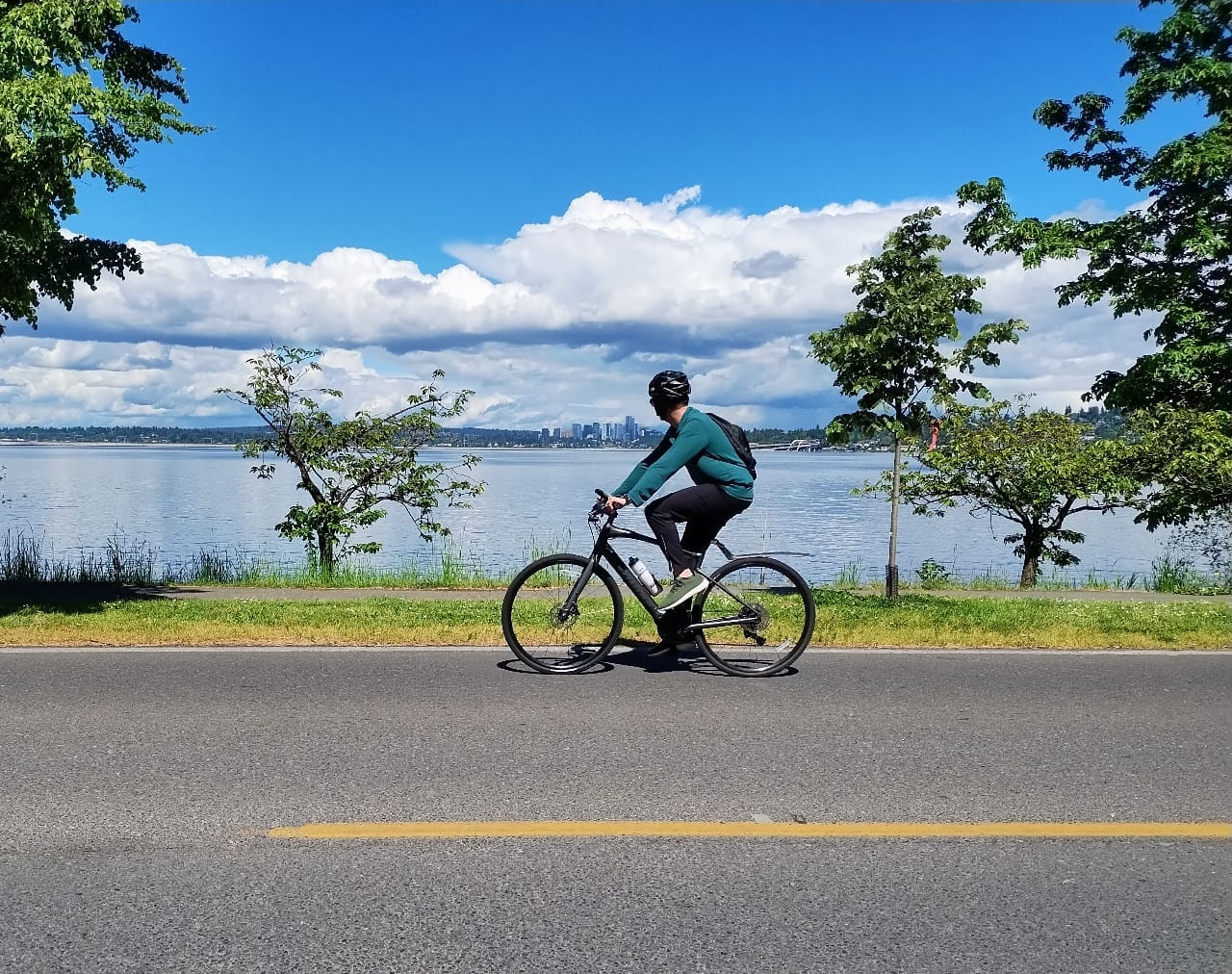
Mayor Katie Wilson is significantly expanding Seattle's only annual open streets event to cover nearly every single weekend between Memorial Day and Labor Day, as revealed in the 2026 schedule released on Monday. During Bicycle Weekends Lake Washington Boulevard shuts down to through car traffic between Seward Park and Mount Baker Beach, opening this section to care-free walking, rolling, biking, and strolling.
Apart from August 1-2, when the annual Seafair hydroplane races are set to take place, every single weekend will be a Bicycle Weekend this summer, with Lake Washington Boulevard closing around 7 pm Friday and reopening early Monday morning. On three holiday weekends, including Memorial Day, the Fourth of July, and Labor Day, the street will remain open for an extra day. This makes it much easier for drivers to predict when closures will occur, and for walkers and rollers to know when they can get out to enjoy the street.
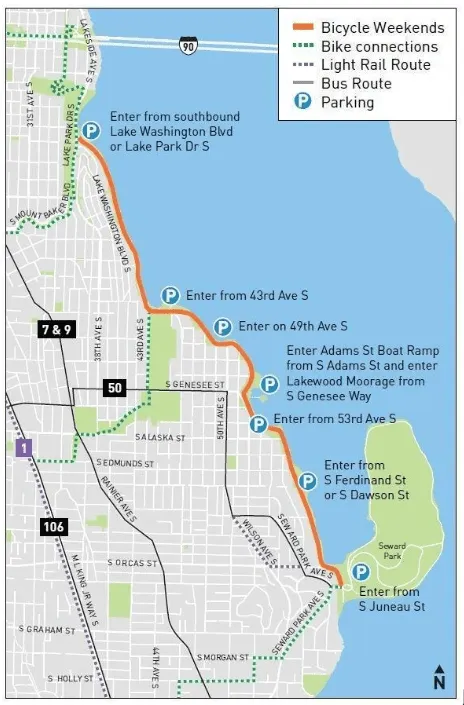
Bicycle Weekends had been dramatically scaled back under former Mayor Bruce Harrell to just ten weekends across the summer, with no extended holiday weekends in 2025. That administration's choice to hit the brakes on expanding summer access to Lake Washington Boulevard was in direct contrast with the approach of his predecessor, Jenny Durkan, who opened the street for long stretches throughout the early stages of the Covid-19 pandemic.
Harrell's reductions appear to have been made in response to driving advocates along the street, including the group Coexist Lake Washington, which describes itself as dedicated to "making sure that the voices of drivers" are included in any potential changes to Lake Washington Boulevard. Internal city emails obtained by The Urbanist in 2024 described a "brokered compromise" reached by Bruce Harrell's office that actually left out sustainable transportation advocates and kept Bicycle Weekends confined to a small number of dates. Those emails also referenced the fact that scaling back things even further, removing Saturdays from Bicycle Weekends, had been on the table.
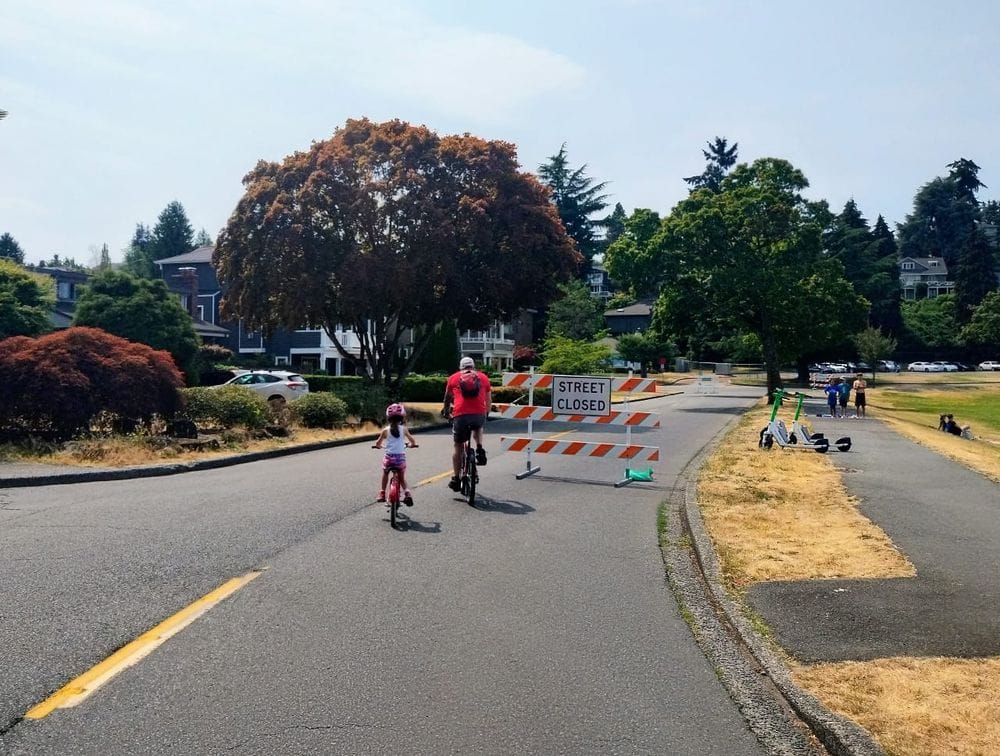
“Seattle summers are beautiful, and everyone should be able to enjoy them,” Mayor Wilson said in a press release timed with the announcement. “We’re opening Lake Washington Boulevard every weekend to make more space for people to bike, walk, roll, and be outside. This is your city, and it should be easy to get out and enjoy our sunny days.”
It will now fall to the Wilson administration to decide whether to pursue a bolder vision for one of the city's most highly trafficked park spaces. Despite being an arterial street, the corridor is in Seattle Parks and Recreation's jurisdiction, with advocates pushing for more aggressive changes to de-prioritize through traffic at all times for years.
The Urbanist is a nonprofit newsroom powered by reader support. Become a member, get perks, and support local journalism.
In 2022, District 2 Councilmember Tammy Morales succeeded in passing a budget amendment that would have advanced a "protected path" along the street for people who bike and roll. But the Harrell administration diverted those dollars away, convening a taskforce that deadlocked on the issue of reallocating any space along the Boulevard and only came to agreement on the issue of traffic calming.
Even when those calming upgrades were designed, those also went too far for some Rainier Valley residents, with the City quietly cancelling a whole slate of changes that would have improved safety. Due to that backpedal, Seattle Parks had to return dollars that had been allocated to the project, via a state Transportation Improvement Board (TIB) grant.
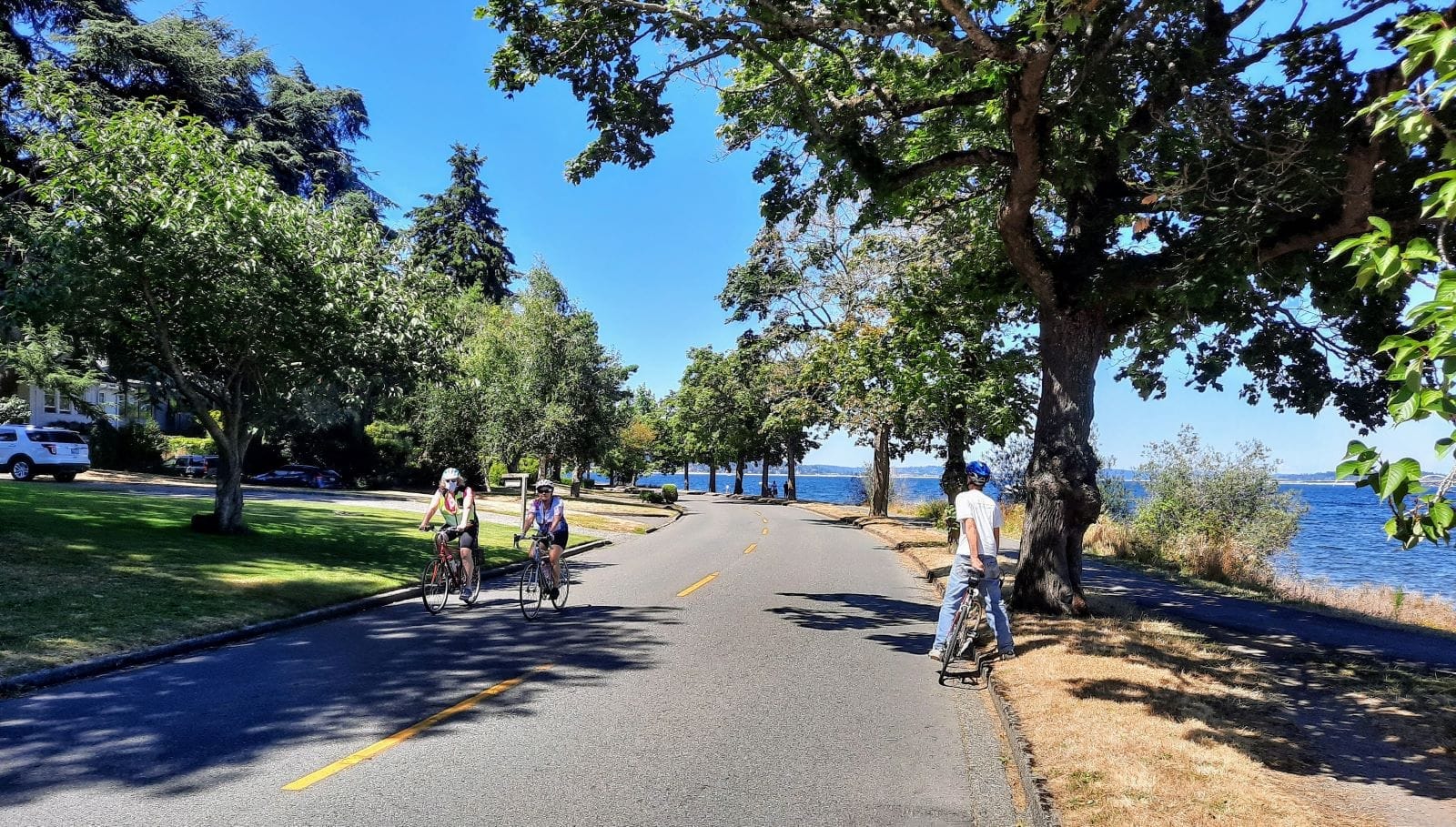
In 2020, Seattle Neighborhood Greenways (since renamed Seattle Streets Alliance) proposed pedestrianizing the street. To achieve this vision, the group has floated the idea of converting the boulevard into a one-way for motorists in order to continue to serve driveways along the western edge of the street, while turning the waterfront side of the street into a bike and pedestrian thoroughfare.
An ambitious Bicycle Weekends schedule is one strong signal that the Wilson administration doesn't see itself as beholden to any past "compromise" constraining use of the most beloved stretches of roadway in the city.
The new administration is also in a position to advance pedestrianization – either permanent or temporary – across the city's transportation system more broadly. An announcement this spring around creating four "low-pollution neighborhoods" provides a major opening to explore creating pedestrian streets that de-prioritize through traffic, as does SDOT's new People Streets and Public Spaces program. With both programs funded by the 2024 Seattle Transportation Levy, Wilson and her team have the resources and the political will behind them to act bold.
In the meantime, enjoy your additional Bicycle Weekends, Seattle.
 Ryan Packer
 Ryan Packer