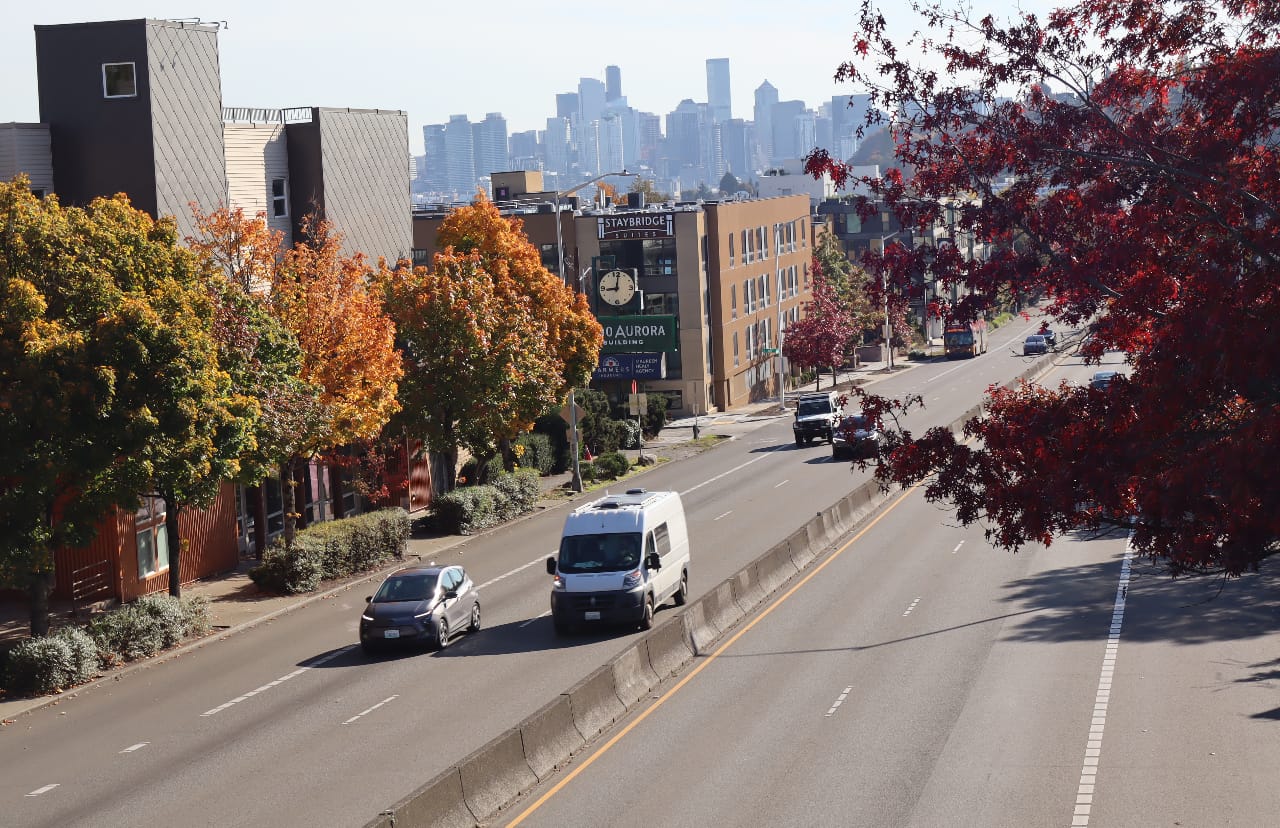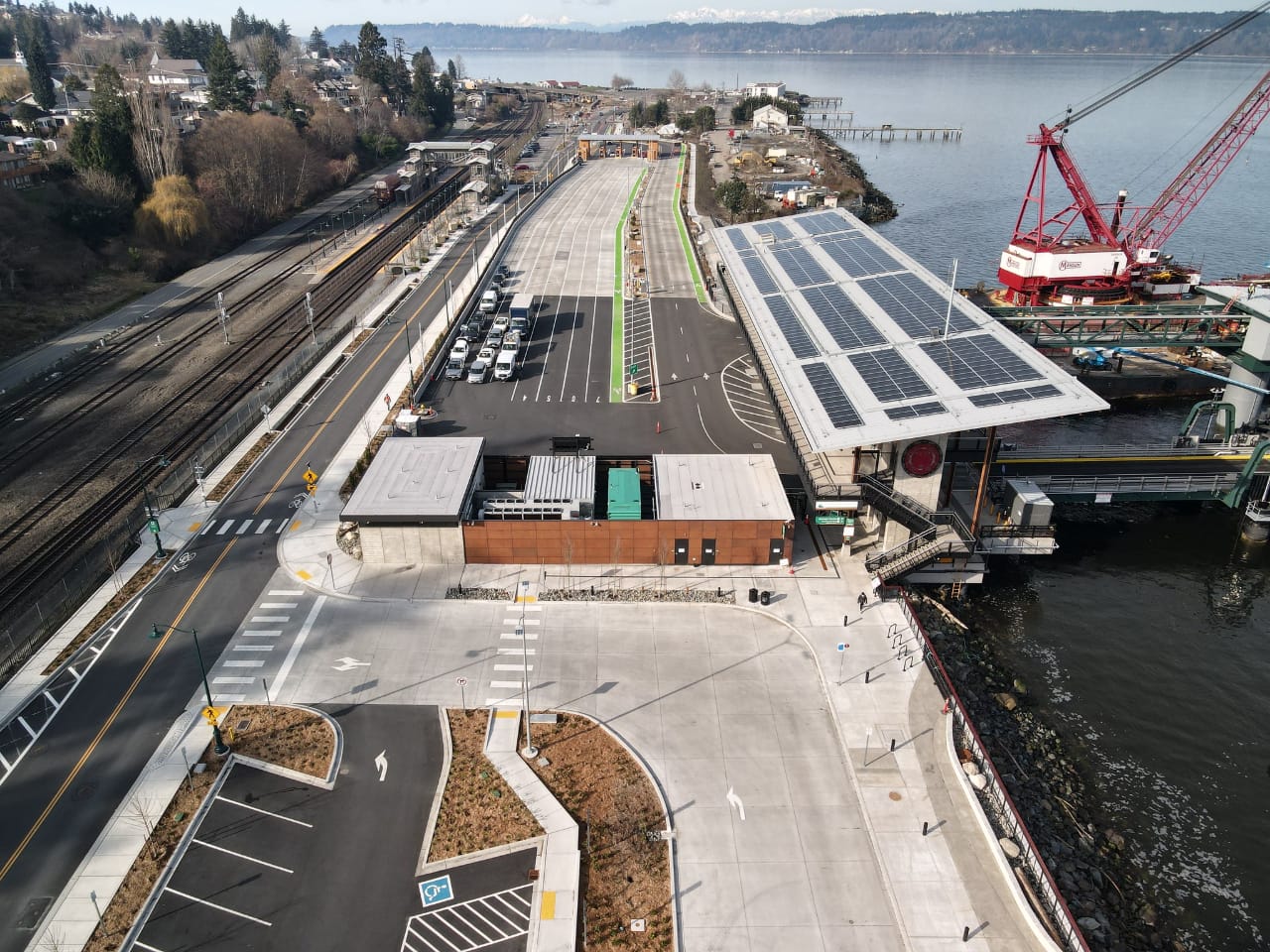
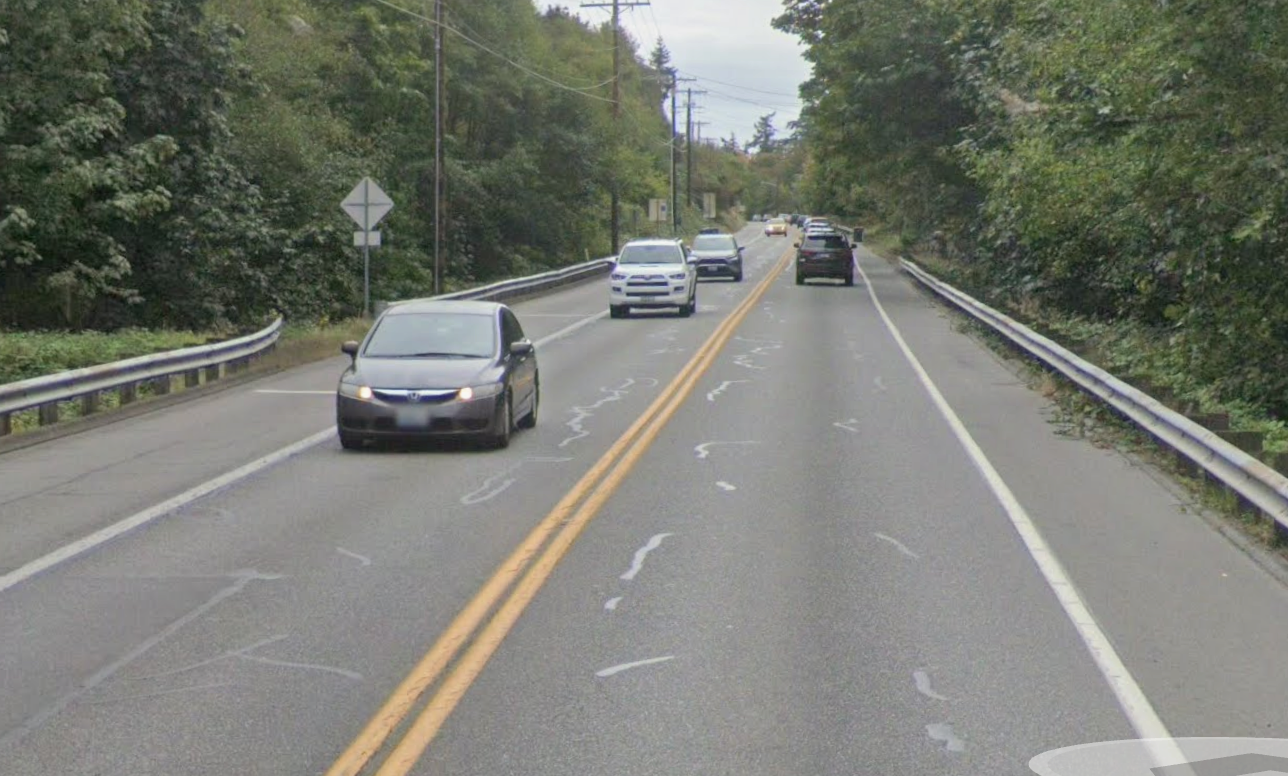
Accessing Mukilteo's state ferry terminal, and by extension Whidbey Island and places beyond, almost always means having to navigate State Route 525. Also known as the Mukilteo Speedway, SR 525 climbs up from the Mukilteo waterfront after passing over railroad tracks that hug the shoreline, providing one of the few direct north-south routes through the city. While direct, it has limited bicycle and pedestrian infrastructure – no sidewalks and just a shoulder in the uphill direction for any cyclist who doesn't feel safe mixing with traffic.
Although a relatively recent change in state law is set to provide some upgrades, those changes are set to stop well short of the promise of full multimodal access.
State highways just like SR 525 were the intended target of a 2022 change in state law commonly referred to as the "Complete Streets Mandate." That adjustment, tucked into the Move Ahead Washington transportation funding package, directed the Washington State Department of Transportation (WSDOT) to start planning for "facilities that provide street access with all users in mind, including pedestrians, bicyclists, and public transportation users" into all projects that cost more than $500,000, a number that was revised up to $1 million three years later.
When it passed, the Complete Streets Mandate was hailed as a sea change in highway planning in Washington State. Preservation and maintenance projects were no longer allowed to treat the status quo as the baseline to be maintained, given the fact that more than 500 miles of state highways through population centers lack pedestrian facilities, and more than 1,100 miles through population centers lack adequate bike facilities, according to WSDOT's landmark 2020 Active Transportation Plan.
Already, the mandate has changed the course of some major projects, pushing critical corridors in a much more multimodal direction. Along SR 99 through Edmonds, for example, separated bike paths were incorporated into a revamp that had been in the works before the mandate was approved, queuing up safe places to bike where they previously would have been unthinkable. But not every corridor is so lucky.
That brings us back to Mukilteo, where a repaving project that ramped up into construction this summer provides a clearer view of the Compete Streets Mandate's current shortcomings. While WSDOT is set to install several new pedestrian crossings with flashing beacons, and add a stretch of new sidewalk connecting to a bus stop, the corridor will not see bike facilities added across its entire length.
Instead, WSDOT will only install a bike lane south of 84th Street SW, a facility that will terminate just north of the juncture with the "spur" off Paine Field Bouelvard, or SR 526. That means nearly two miles out of a 2.75-mile project will remain a gap in the bike network when the project wraps up.
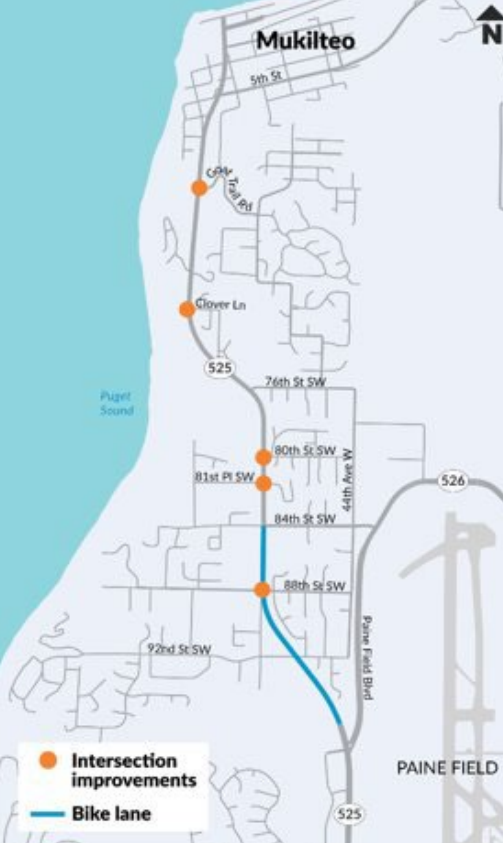
WSDOT project manager Tony Barilla told The Urbanist that the department was able to make room for that stretch of bike lanes by narrowing the other travel lanes and repurposing the shoulder, but that north of 84th such a move wasn't feasible without impacting the existing traffic patterns.
"Once you get closer to the ferry terminal, there is this dedicated ferry lane, so it needs to maintain that, and we don't have the shoulders, and it just really has to do with what the roadway preserves. It just wasn't feasible to narrow lanes there and remove and reallocate shoulders for infrastructure like this," Barilla said.
But the bike facilities aren't being dropped, they're instead being framed as being "deferred" in part in order to utilize a funding grant that had been set to expire.
"The paving and ADA project received a $1.5 million Puget Sound Regional Council (PSRC) grant with an obligation deadline of May 2026," WSDOT's Complete Streets report on the project notes. "Full implementation of complete streets on SR 525 paving and ADA project [...] has been deferred due to the impact on project schedule and the constraint of PSRC grant obligation deadlines."
WSDOT has also established a long-term vision for SR 525, which would involve a shared-use path that transitions to two-way bike lanes all the way to the ferry terminal. But no timeline exists to be able to implement such a change.
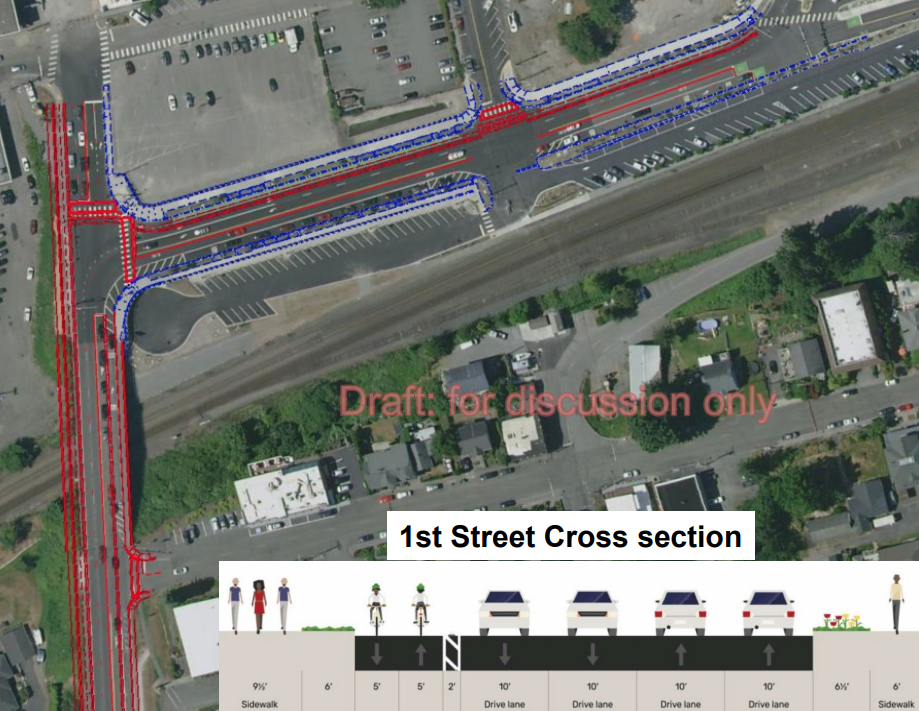
"Everything we put in on this paving and ADA project is forward compatible. We're looking at this corridor holistically, but it is deferred until we have funding and time," Barilla said.
SR 525 is far from the only place where Complete Streets improvements are set to be deferred. Along State Route 99 in South King County, a repaving project between State Route 516 and S 272nd Street is set to add bus-only lanes and lane narrowing. But according to presentations made to the project's technical working group, WSDOT is set defer any bicycle facility component to a future date, despite the high benefits that would come from providing connectivity to Sound Transit's light rail station at Kent Des Moines Road.
WSDOT portrayed the mandate not as falling short, but providing the department with a more long-term roadmap for how to upgrade highways across the state network. But the decision whether to implement upgrades immediately along with repaving or "defer" them is one that will have a major impact on whether the mandate can truly succeed at scaling up access, or if it will happen more piecemeal.
"These are big projects to include multimodal transportation along a state highway. Complete Streets is a way to let all users use our travel facility or our roadways to travel, and so as we do projects on our state highways, and as the city does things, and as developers make new facilities, we're given a guidance of what the community wants for their multimodal transportation. And over time, through state, city, developer work, we'll get there," WSDOT spokesperson Eric Zackula told The Urbanist. "We're not here to just come in, do it, and leave. We're here for the long haul on this Complete Streets project, and and we'll get there. But we our work provides a vision, and that's what we're doing. And we're taking it bit by bit. And providing a vision for the city and also developers to to make it come true."
For bike riders just trying to get to the Mukilteo waterfront and ferry terminal, that's likely cold comfort.
 Mike McGinn
 Ryan Packer