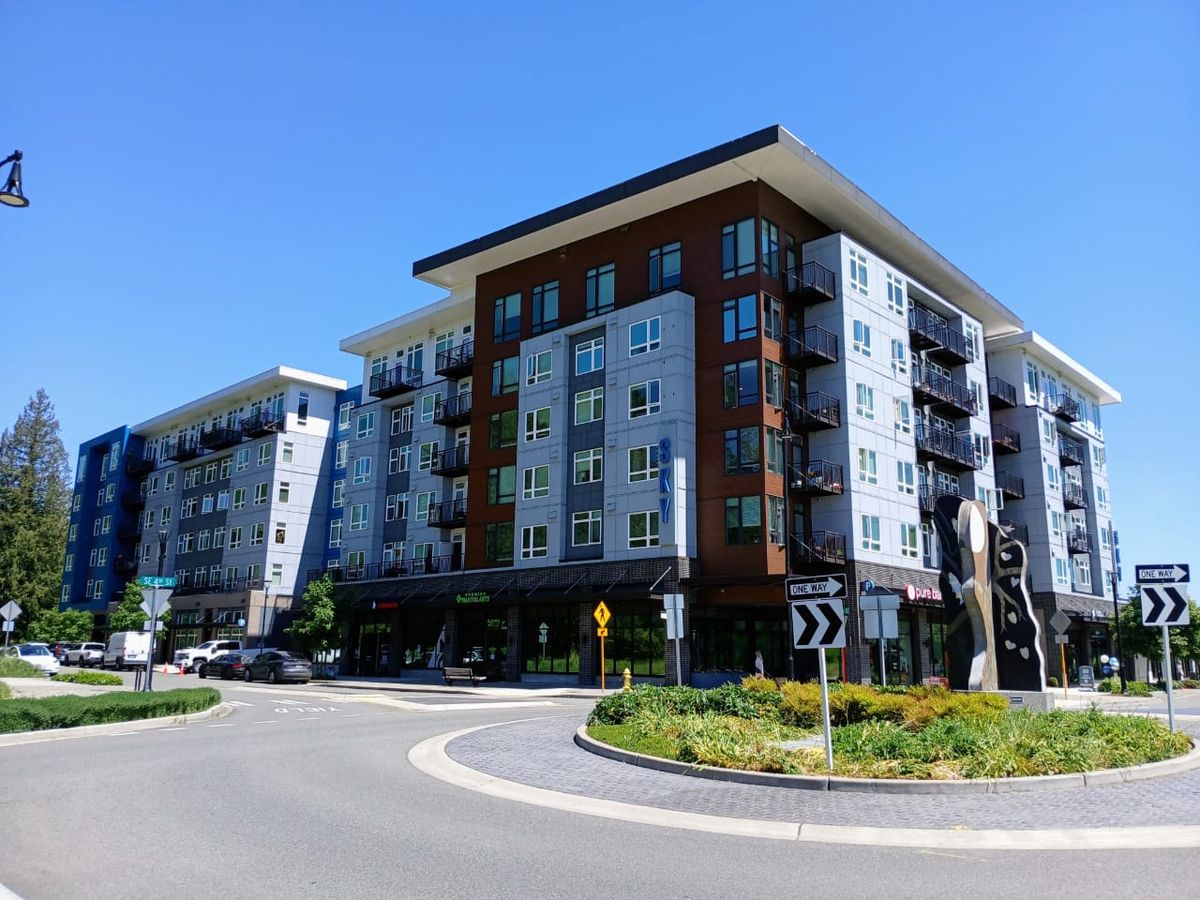
Councilmembers in the sleepy Eastside bedroom city that is Sammamish face a crucial decision later this fall, in the wake of council elections that tilted the balance of power away from its previous pro-density direction. The impact of the decision will likely be felt for years to come, as city leaders decide whether to step away from a plan that was intended to finally foster the beleaguered Town Center area into something closer to a real downtown for a city of nearly 70,000.
Incorporated in 1999, Sammamish has been trying to foster some type of center city for its entire (albeit brief) existence. In 2008, after years of debate, the council approved a Town Center plan that capped development at 2,000 housing units, despite capacity for many more across 240 acres.
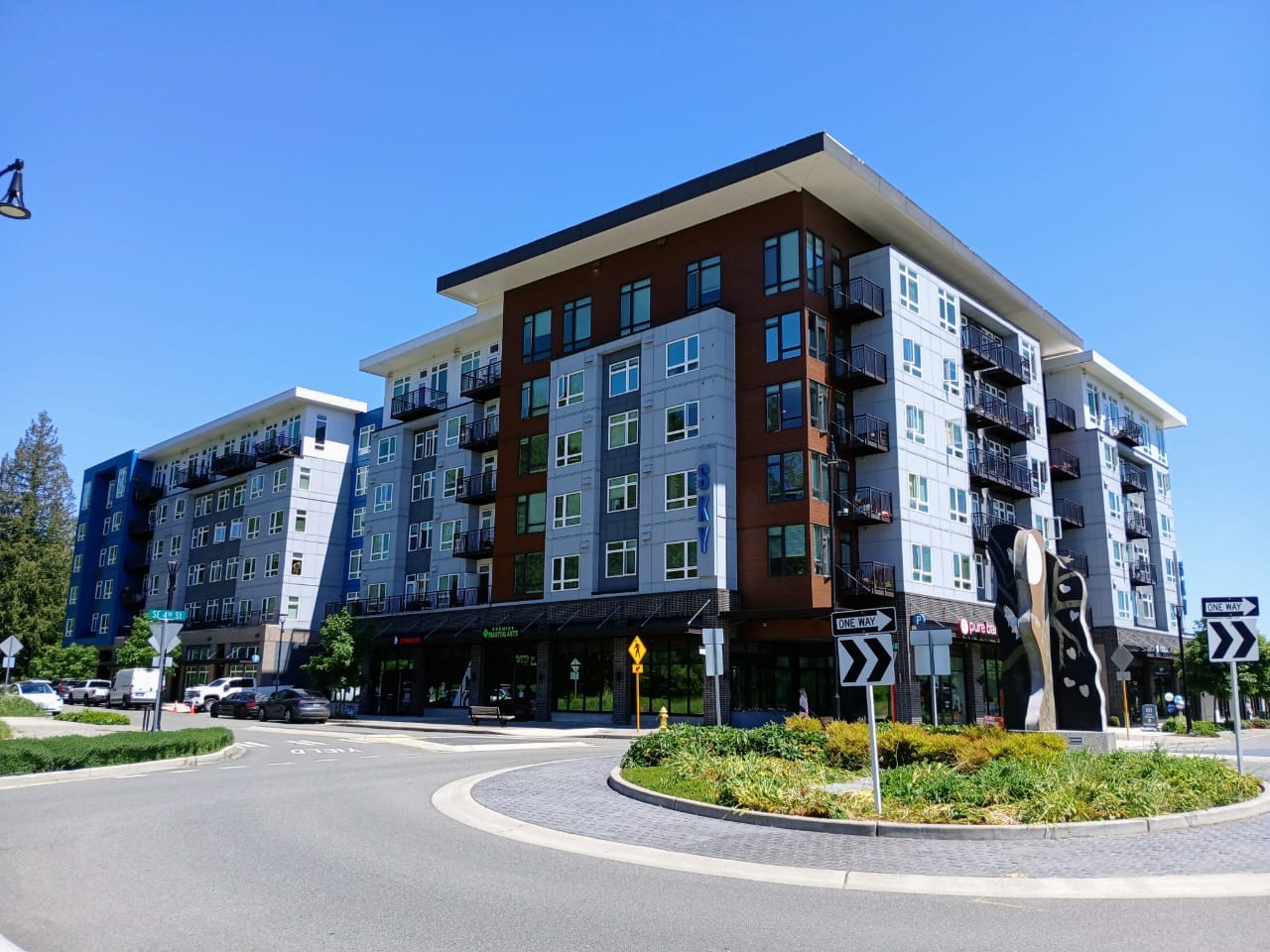
Very little of that plan, which envisioned separate mixed-use "nodes" far away from the main thoroughfare of 228th Avenue SE, came to fruition. One reason was very meager density limits, with developers like the builders of the Village at Sammamish Town Center (home to Metropolitan Market) consolidating their projects on a portion of a lot in order to be able to build up.
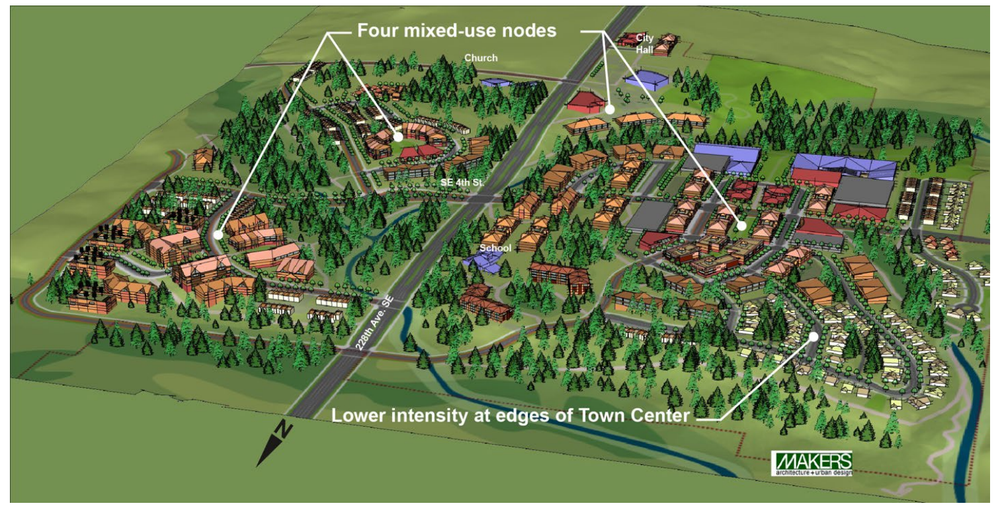
"When the Town Center was originally adopted, it was envisioned in part as a place to put the growth. However, the opposite, you could argue, actually happened, and instead of growth happening in the town center, the growth continued to happen as infill in the neighborhoods in the form of single-family residential subdivisions," Sammamish Community Development Director David Pyle said last month.
A few months before the November election, the Sammamish Council voted 6 to 1 to advance study of a growth alternative for Town Center that would have increased the upper limit on the number of units that could be built from 2,000 – where it has stood for nearly two decades – to 4,000. The move was intended to be a step toward creating development standards that allow a mixed-use neighborhood to take shape, rather than Sammamish's current glide path toward more townhouse development in the so-called city center.
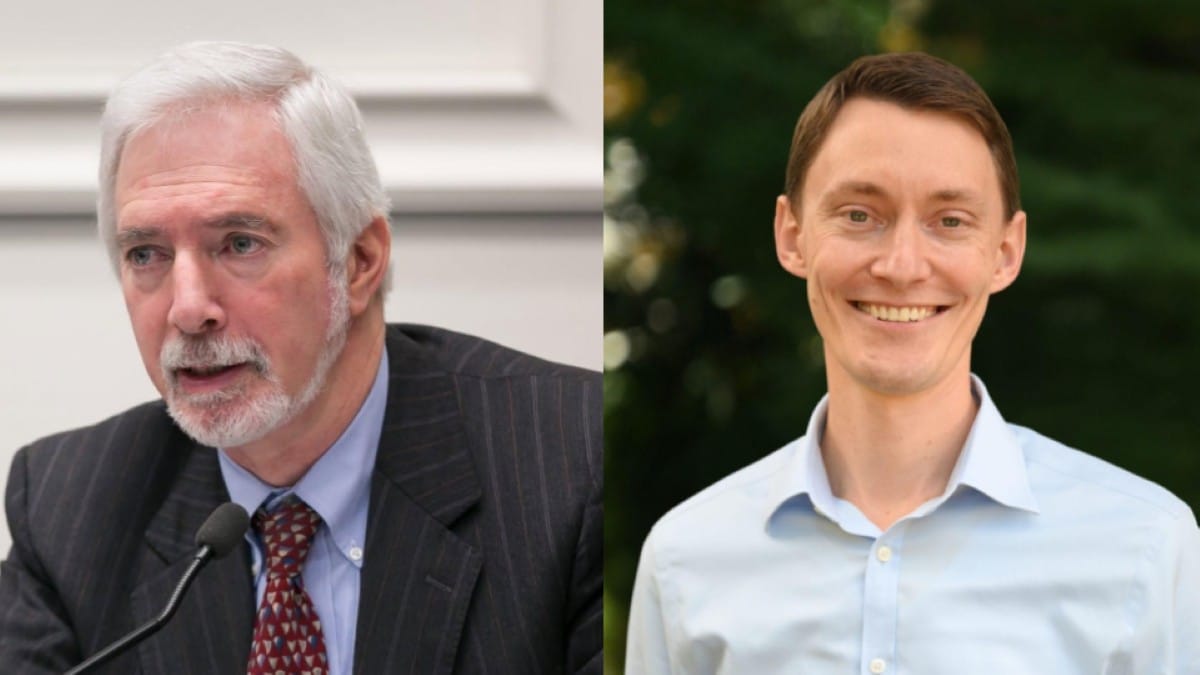
Then the voters weighed in, sweeping two pro-density councilmembers out of office and tilting the balance of power away from the bloc that had voted yes last year. In a campaign season that had focused heavily on the Town Center issue, all three councilmembers who took office in January had opposed the idea of studying 4,000 units in explicit terms, citing issues like traffic, infrastructure costs, and "unchecked development."
Josh Amato, who was selected by the new growth-skeptical majority to be mayor in January, had included a banner at the top of his campaign website that read "Josh is opposed to the 4,000 unit upzone in the Town Center."
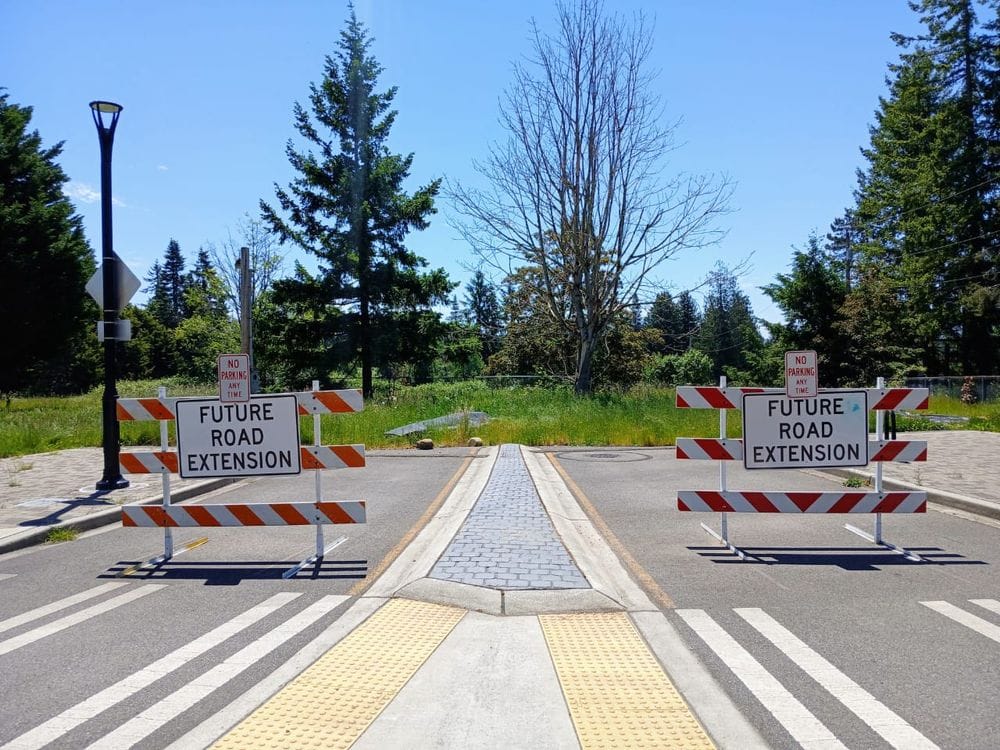
Now the city has to decide how to move forward, but doing nothing and fully abandoning the Town Center plan isn't an option. Without some density increases within the city, Sammamish doesn't have enough capacity for households across lower income bands, a directive spelled out in House Bill 1220, which the state legislature passed in 2021.
Moreover, City leaders are eyeing the new Housing Accountability Act, in which the state's Commerce Department reviews the growth plans in select cities to make sure that they're in compliance, and they don't want to end up on the watch list alongside places like Carnation and Bainbridge Island. Before moving to pass an emergency ordinance to get into compliance, Bainbridge had been flirting with triggering the Builder's Remedy, which would have superseded local zoning to allow much greater height and density when builders include a set amount of affordable housing.
In July, city staff sought direction from the Sammamish Planning Commission, with commissioners expressing a clear interest in an "option 4" that would take planned capacity increases in Town Center and distribute that to the city's other commercial centers, like Klahanie, Pine Lake, and Inglewood.
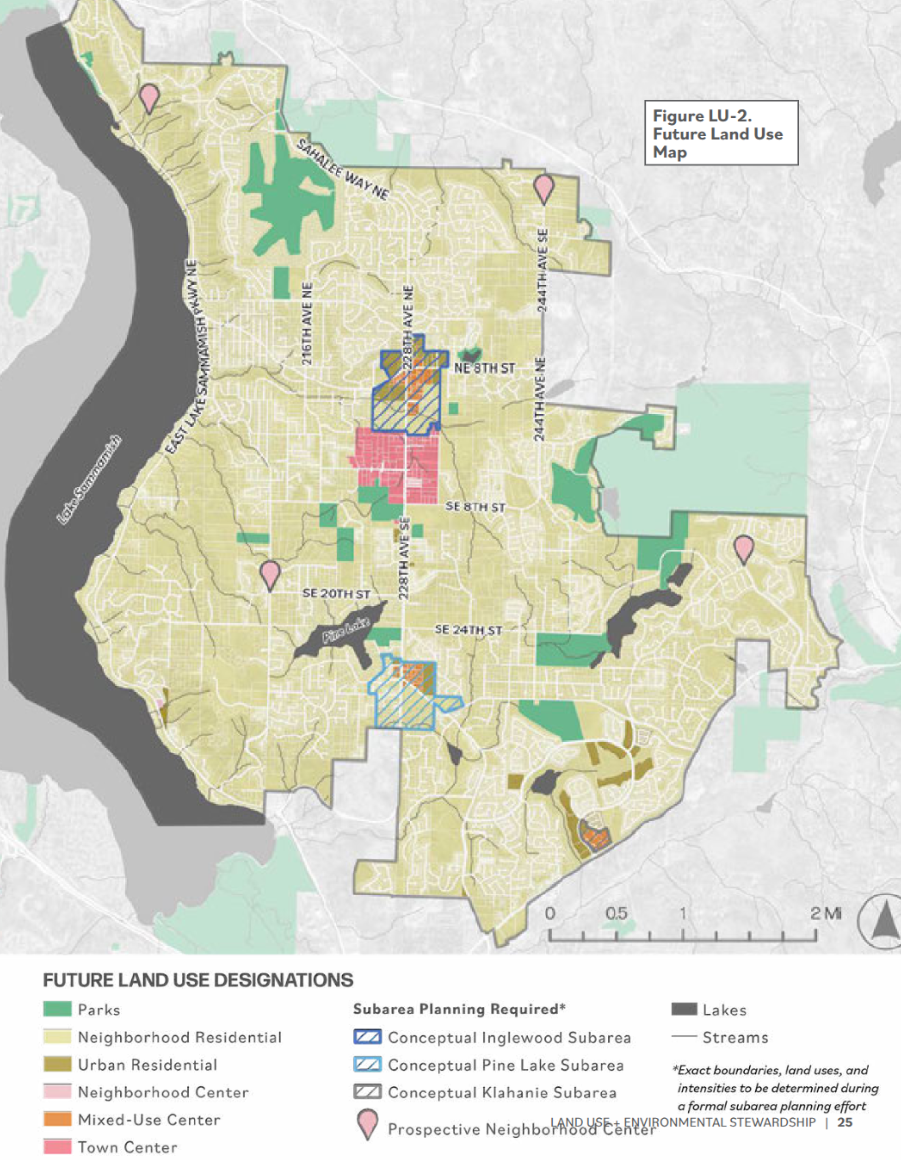
"The biggest advantage of option four, is if you spread it over six or seven [...] different neighborhood centers or subareas, you distribute the traffic, which has been the major, major opposition of the community, going from 2,000 to 4,000, because the town center basically infrastructure is not there to support even the 2,000," commission vice chair Seyed Safavian said.
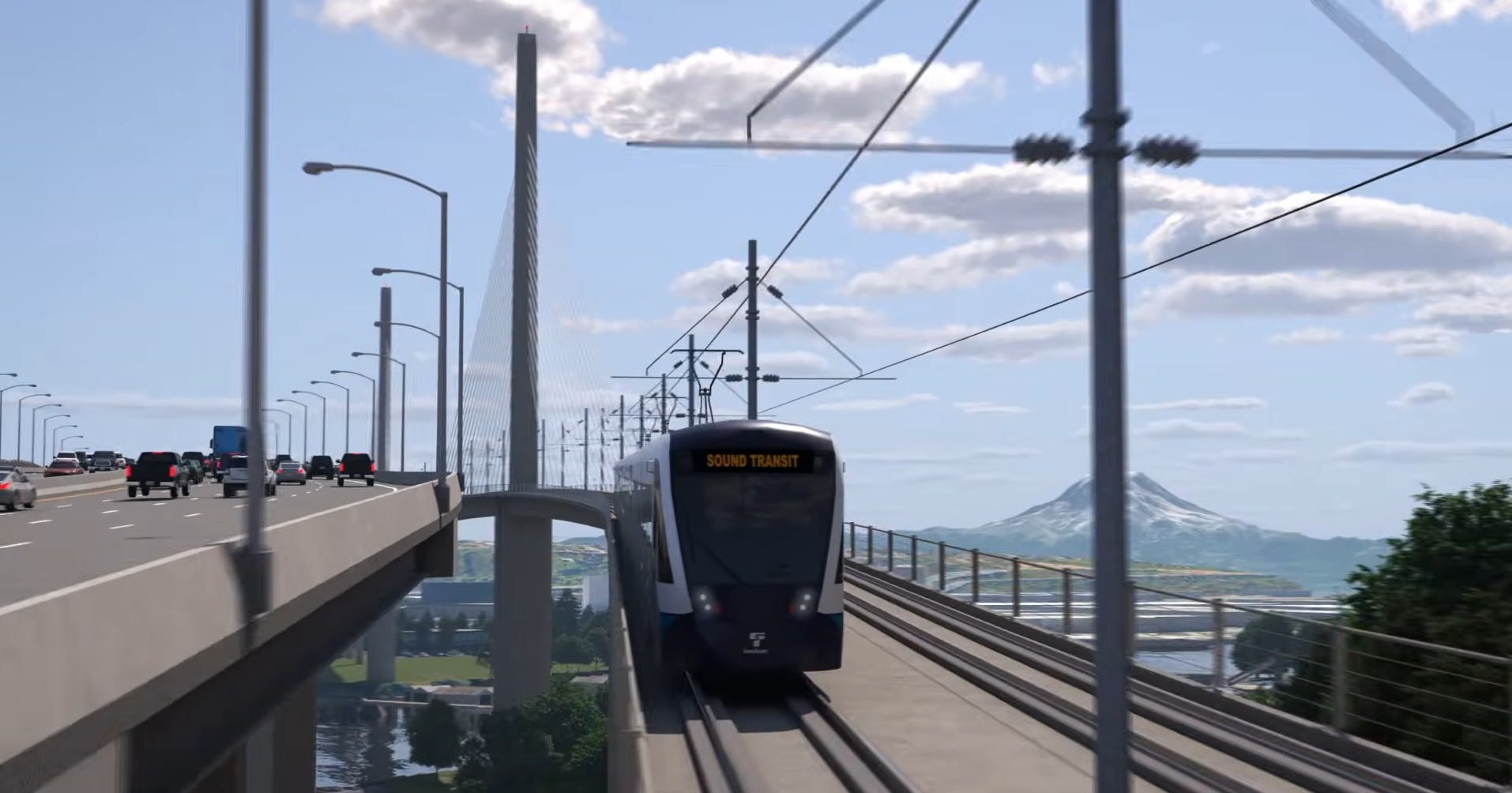
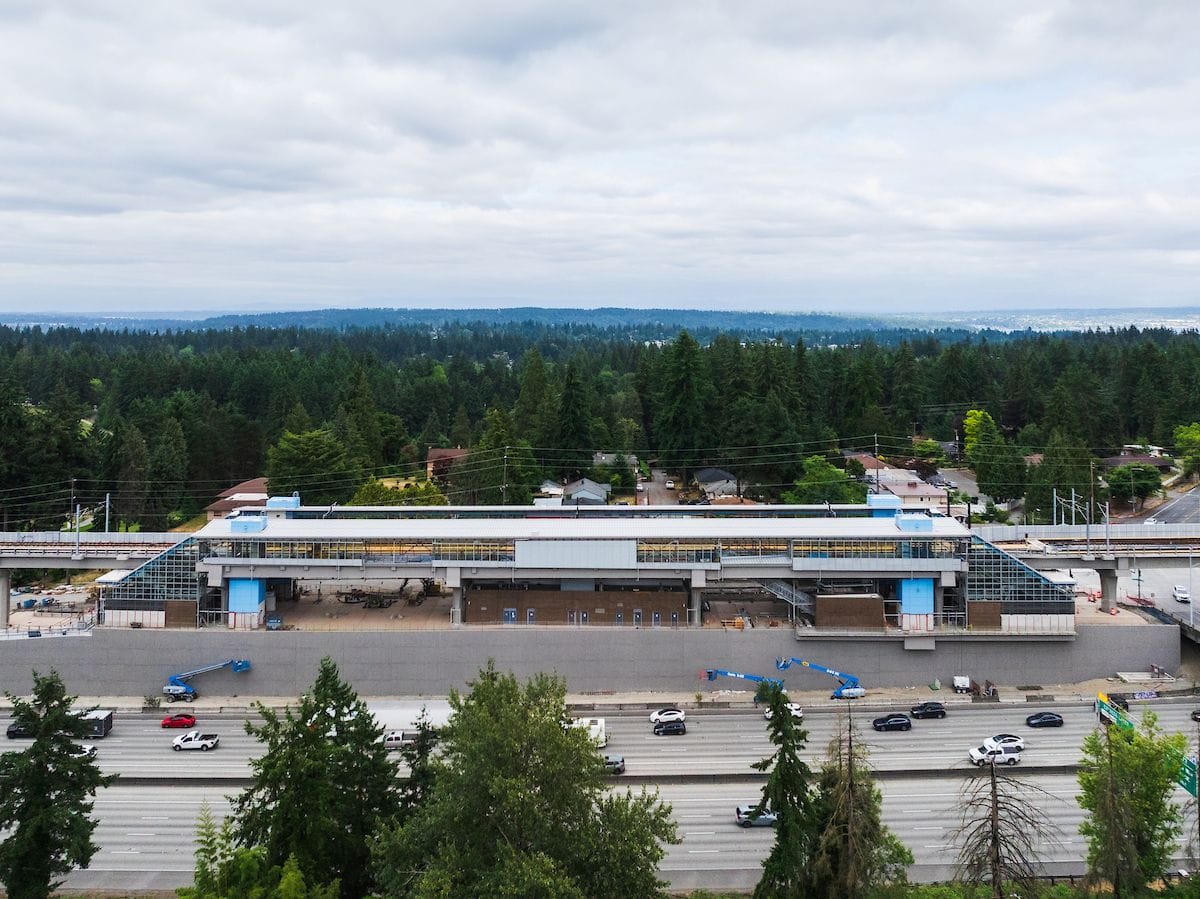
Safavian noted that Klahanie, currently home to a QFC grocery store, is well-positioned when it comes to a Sound Transit light rail station in Central Issaquah.
"Klahanie has perfect access, and within 5, 10 minutes... access to the freeway, access to the future transit, and Klahanie has really very good roads, road capacity, intersections, roadway improvement infrastructure, and all that that really helps us a lot as far as accepting more housing units, particularly for affordable housing," Safavian said.
Ultimately, it will be up to the Sammamish Council to decide how to proceed, with some moves this year signaling the new majority's potential direction. A unanimous vote last month removes a policy from the city's Comprehensive Plan that would have pushed the city to pursue a designation as a regional growth center, a move that could have unlocked more infrastructure funding for the city – and likely come with requirements for more density.
Just this week, the council voted 5-2 to overhaul its affordability requirements in low-density residential areas, essentially gutting a fee in-lieu program that was intended to act as something of a check on the city's continued proliferation of large single-family homes. Previously, all new homes over 1,500 square feet were required to pay a fee that would be used to fund affordable housing, but that threshold was raised to 1,750 square feet – with the fee only applying to square footage exceeding that threshold.
But the looming Town Center vote will likely be the most pivotal of the year, determining how Sammamish grows for at least a decade.
"Trying what we tried from before, we will end up with the same opposition that we faced from before. It's the same community, it's the same people. Let's try something different," planning commissioner Hisham Elkhawad said. "You said it needs more work. I would rather do the more work and succeed at the end of it instead of trying what we tried, and we failed."
Correction: an earlier version of this article incorrectly stated that three councilmembers lost their reelection bid last year, but the number is two: one seat was an open race.
 Ryan Packer
 Ryan Packer