For decades, transportation infrastructure projects have been used to segregate and effectively destroy low-income and Black, Indigenous, people of color (BIPOC) communities. It happened in Los Angeles, Saint Paul, Minn., New Orleans, Washington D.C., and lest we think “we're better than that,” it's happened here.
Those communities did not benefit from their sacrifice. Neighborhoods were isolated, cut in half, subjected to noise and air pollution from freeways, and suffered higher rates of asthma, heart disease, and cancer for generations. Residents of the most diverse, working-class neighborhoods still had to own, upkeep, insure, and fuel a car, making them eternally dependent on the most expensive mode of transit.
When we first unified the three counties to build a regional transit system, we promised ourselves — and each other — that we were going to do better.
Any parent knows that it’s not always easy to keep promises. This is exactly what South King County is suggesting the Sound Transit Board of Directors must do now.
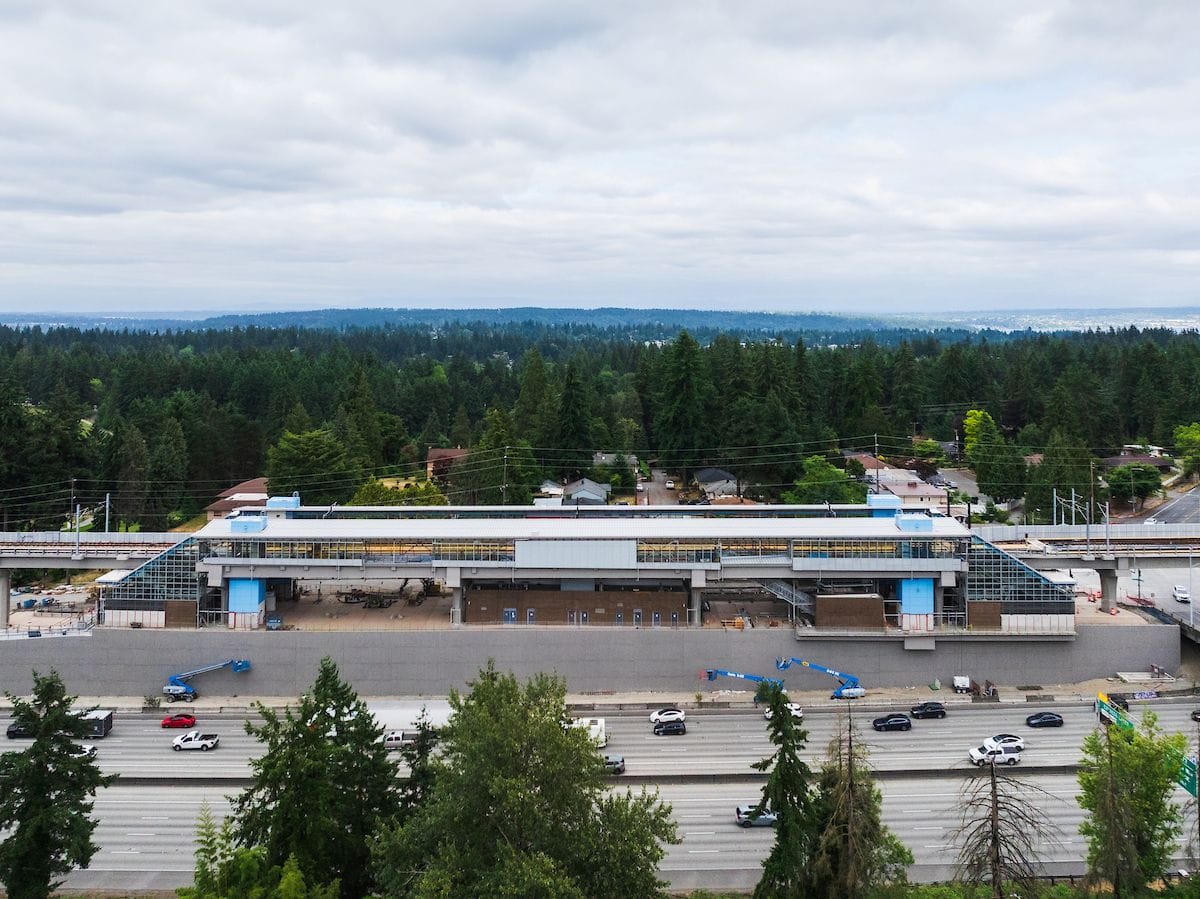
At the end of the month, the Sound Transit Board will decide whether to deliver on the decades-old promise to South King County to build the Boeing Access Road (BAR) and Graham Street stations. Both stations have already been approved — and paid for — by residents. Promises for these stations have already been broken before.
Boeing Access Road was approved in the 1996 Sound Move ballot. When funds ran short in 2001, it was deferred to get light rail to the airport. Graham Street was added in the late 1990s and voters committed to both stations in Sound Transit 3 (2016). Both stations were reaffirmed as Tier 1 projects in 2021.

But now that funds are running short again, the stations are back on the chopping block.
Another deferral of BAR and Graham Street would feel like canceling not just the stations, but the people whose votes and tax dollars were promised to deliver them. In order to evaluate the degree to which our policy choices meet the rhetoric about racial and economic justice, we must acknowledge the difference between who benefits and who loses in each proposed scenario. BAR and Graham clearly do more to benefit BIPOC communities. These stations also deliver significant economic benefits at low cost.

Here’s why: They are infill stations, meaning they are built on the already existing “spine” of track.
As the light rail trains already go through these communities, adding stations literally opens the door to residents without harm to residential neighborhoods.
These stations will be in transit deserts and will serve large areas that don’t currently have good access to public transit.

Graham Street is surrounded by existing residential neighborhoods, where there are high numbers of homeowners and renters alike who are working jobs with very little time flexibility if they are late. Boeing Access Road includes parking so residents can use the light rail to commute to jobs elsewhere; the station will also help incoming commuters get to nearby aerospace, manufacturing, education and other jobs. Visitors to the Museum of Flight will also be able to use the Boeing Access Road station.
Light rail stations don't have to follow the mixed-use, retail-heavy model many people are most familiar with. The system we designed supports different kinds of stations for different kinds of use. Graham Street serves a diverse residential neighborhood, and Boeing Access Road is multimodal in a more industrial area: both are essential to connecting people with jobs.
We can’t expect everyone in our region to be economically secure if they can’t get to work. We have the solution on hand: when we are thoughtful about transit infrastructure, we encourage housing and employment opportunities to grow.
In the past, infrastructure has fractured some communities to enrich others. This is our opportunity to show that we can do it better: build infrastructure that permanently enhances and connects communities.
The voters have done their job. By voting on the projects twice, and paying for them, they have shown up for the people of South King County. Sound Transit claims to look through an equity lens: how effective is that lens, if leadership cancels the projects that were specifically designed to spread economic opportunity to BIPOC communities?
Our region continues to have extraordinary economic opportunity — let’s make sure we don’t leave anyone behind. It's time for the Sound Transit Board to deliver and include the Graham Street and Boeing Access Road stations in this year’s project realignment.
Rhonda Lewis has worked with municipal and county governments in King County for the past 25 years. She accepted the appointment as King County Councilmember for District 2 in December 2025 and is the first Black woman to serve on the Council.
 Amy Sundberg
 Doug Trumm