Councilmember Eddie Lin is set to introduce legislation explicitly allowing a pair of citizen appeals that have challenged the environmental review underpinning Seattle's current growth plan to be heard by the City's hearing examiner. The two appeals seek to require city planners to conduct a more rigorous analysis of the impact of future housing growth in the city, but were likely to be dismissed thanks to a new law approved by the City Council this summer.
The appeals date to last February, with one filed by Friends of Ravenna-Cowen and Mount Baker lawyer John M. Cary, and the other by Seattle Symphony musician Jennifer Godfrey, whose challenge has become known as the “Orca Appeal.”
With both challenges trying to hit the brakes on former Bruce Harrell's One Seattle Comprehensive Plan, Godfrey’s legal filings allege that impacts from increased stormwater runoff and declining tree canopy on the Puget Sound’s population of endangered Southern Resident killer whales were not sufficiently studied by the City. Local conservation groups including Birds Connect Seattle (formerly Seattle Audubon) and the Puget Sound Chapter of the American Cetacean Society have signed onto those claims.
Since the two appeals were filed last year, Lin introduced legislation that would remove the path of city-level appeals under the State Environmental Policy Act (SEPA) when it comes to both updates to the Comprehensive Plan and for area-wide rezones. Last month, the City Attorney's office announced an intent to ask for dismissal under that new law, which had passed on a razor-thin 5-4 margin following a contentious debate.
Lin told The Urbanist this week that the carve-out is intended to allow the process around the appeals to play out more quickly while the implementation of the Comprehensive Plan is already being delayed by a parallel appeal – also filed by Godfrey – at the state's Growth Management Hearings Board. With dismissal at the city level, King County Superior Court would have been the only available avenue for appeal – a path that could present the city with additional surprises down the road.
"We anticipate bringing an amendment to the bill to more clearly say that that [appeal] should go forward, with the idea that hopefully it can be expedited. If anything comes out of it, if we prevail, then we go along our way, and we finally put the appeal to rest," Lin said. "The worst thing, in my opinion, would be if we dismiss it and then somehow it comes back."
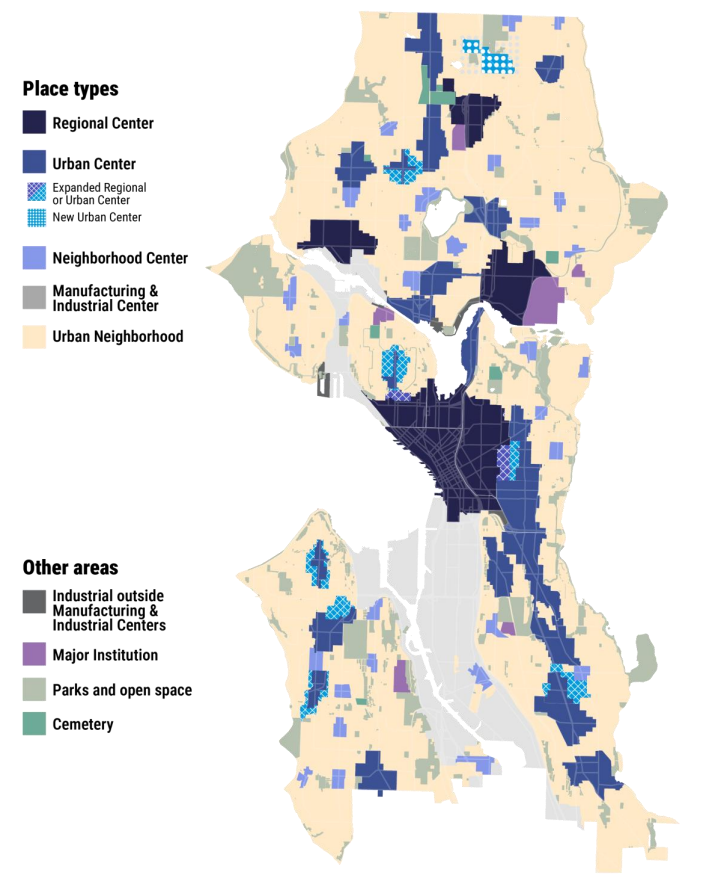
Getting the appeals resolved would mean Seattle could advance forward with fully implementing the One Seattle Plan, rezoning 30 new "neighborhood centers" clustered around existing business district for denser housing and businesses. Additionally, the stalled plan would upzone the immediate blocks along frequent King County Metro bus routes.
As it stands, those changes aren't likely to happen until next fall at the earliest.
Homeowner-aligned groups had been pushing for Lin to act to stop the dismissal, citing comments that he made ahead of the passage of his SEPA reform bill about not wanting the appeals to apply retroactively. But the bill included no such provisions.
"The Seattle City Attorney’s Office has confirmed its intention to seek dismissal of the Orca Appeal," read an email sent late last month by Seattle Residents for Thoughtful Growth, a group recently making a push against middle housing in the Seattle Times opinion section. "Yet before the City Council passed this legislation, its sponsor, Councilmember Eddie Lin, publicly assured his colleagues and Seattle residents that it was not intended to stop the Orca Appeal and that he would urge the City Attorney to let it proceed. The City's proposed action directly contradicts those public assurances and raises serious questions about whether the legislation is being used to accomplish exactly what its sponsor said it would not do."
Godfrey's challenge to the One Seattle plan at the Growth Management Hearings Board was heard this summer, but the effort mostly came up short in a ruling issued September 9. Godfrey and groups including Orca Conservancy, Orca Network, Puget Sound Harvesters Association (referred to as the Joint Petitioners) charged the City with faulty methodology when it comes to calculating whether tree canopy goals would be achieved – increasing stormwater runoff that could harm orcas. However, the hearings board sided with the City.
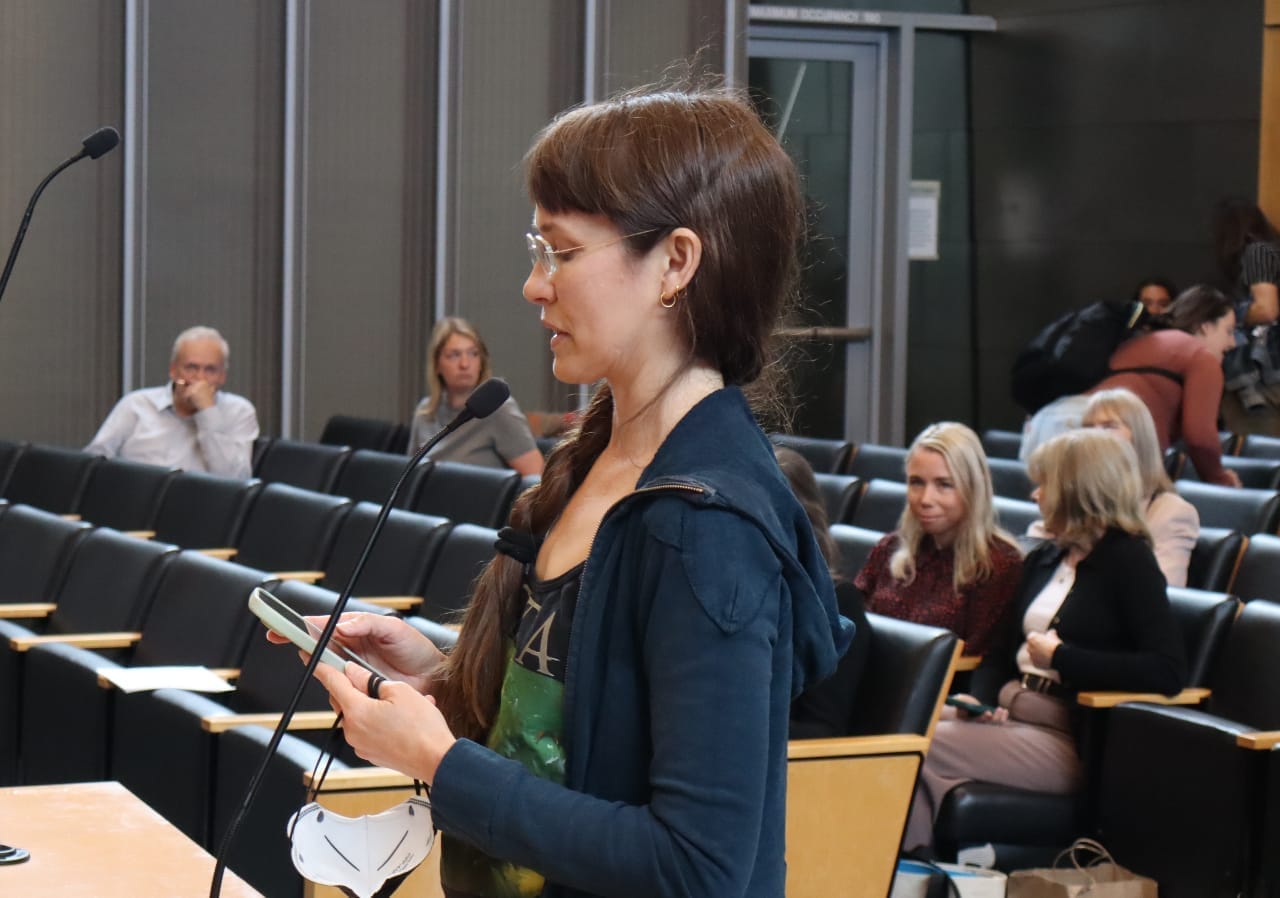
"Joint Petitioners have not shown that the [Final Environmental Impact Statement]’s discussion of existing canopy, past canopy loss, or projected future canopy loss were incorrect," the ruling stated. "Joint Petitioners have not shown that the FEIS’s methodology for quantifying or forecasting canopy was erroneous. Joint Petitioners’ cited evidence is simply insufficient to sustain such a claim."
And it wasn't just the claims around tree canopy goals that fell short.
"Joint Petitioners cited many Comprehensive Plan policies to argument [sic] that the implementing regulations were inconsistent with the Comprehensive Plan, but Joint Petitioners did not provide a policy-by-policy analysis," the ruling read. "The Board disagrees that it was the City’s burden to show how its implementing regulations 'comply' with its policies. Instead, it was Joint Petitioners’ burden to show how the implementing regulations are inconsistent with the policies. But Joint Petitioners did not discuss even a single line of text from the implementing regulations, anywhere in their brief, and so fail to meet their burden."
Instead, the growth hearings board ruled against the City by finding that the scope of the analysis conducted wasn't broad enough, and that the "maximum possible development" under proposed zoning changes would have been studied instead of the "maximum likely development." With a full year provided to conduct that additional analysis, Seattle's Office of Planning and Community Development (OPCD) has described the updates happening now as a "technical add-in" that will not change the plan in any way but nonetheless take significant City staff time to update.
Though providing Godfrey and the other appellants a second bite at the apple could present additional hurdles, Lin is hopeful that letting things play out will ultimately be in the City's best interest. Being able to fully implement the One Seattle Plan will ultimately mean clearing the decks for the next phase of zoning changes, which Mayor Katie Wilson's administration is calling "Taller Denser Faster" in a nod toward the Harrell plan's critics from the pro-housing side. That update has also been referred to as Phase 3 of the Comprehensive Plan.
"I fully stand behind a lot of the reasons why we passed the SEPA bill, and I think there is a lot of other legislation to come that it is going to be very, very impactful, I think, and help us not be subject to these delays for many years to come," Lin said. "It is a little bit tricky when there are pending matters, how legislation affects pending matters, and again, I think for various reasons, including the fact that we are already doing additional environmental review, I'm pretty hopeful that any impacts of this moving forward should be minimal."
Lin told The Urbanist he plans to introduce the carve-out in the coming weeks, following the council's budget process. If the current hearing schedule holds, arguments will take place starting on February 8, 2027.
"It's clearly been a very frustrating experience to have these incredibly long timelines," Lin said. "I'm looking forward to going bigger and bolder as part of the next phases, trying to lay that groundwork, probably more so with Phase 3."
 Ryan Packer
 Ryan Packer