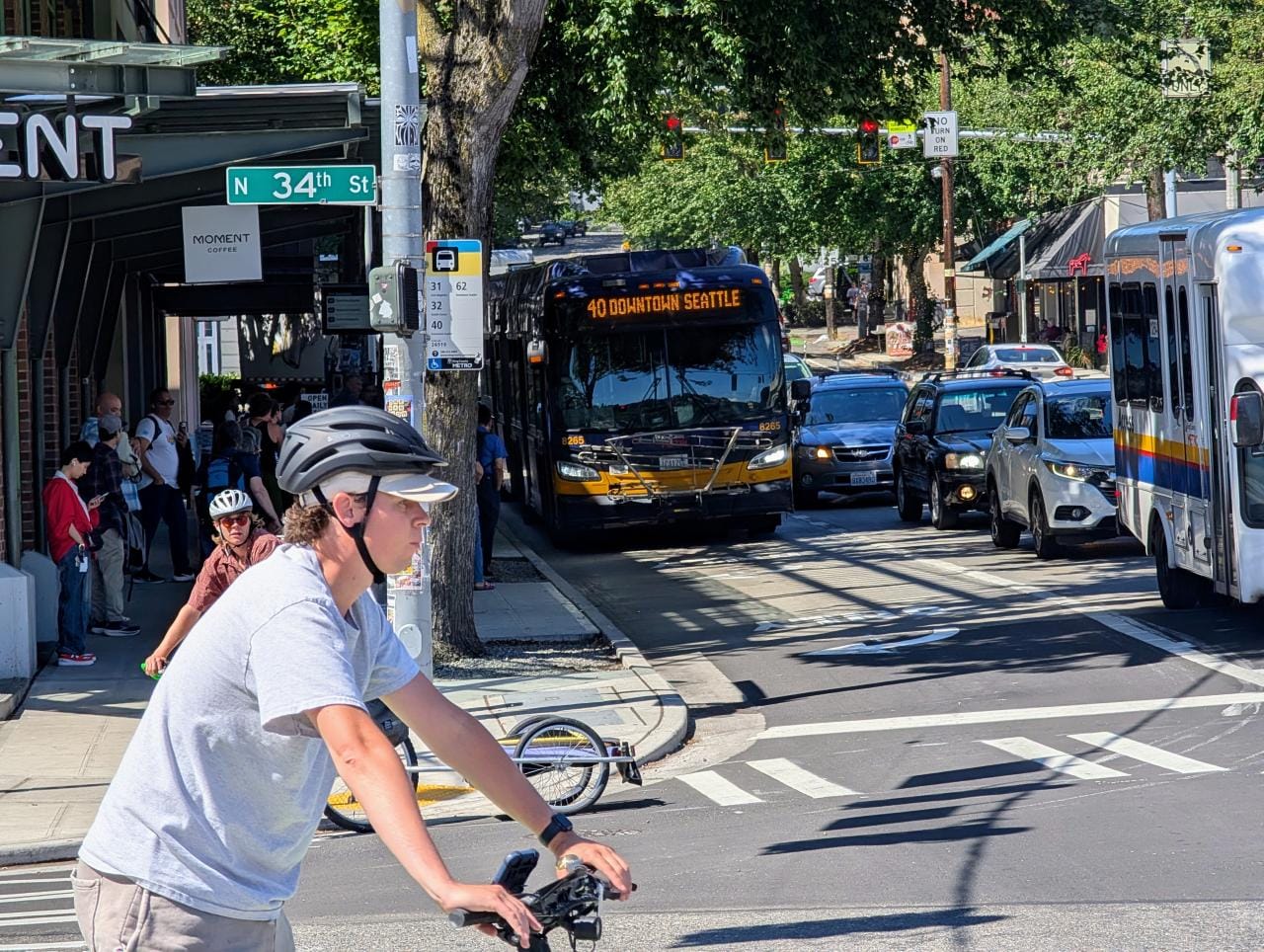
Seattle is a city and region with great public transportation. Voters continually say yes to funding the system - even when elected leadership is reluctant to or unable to fulfil all those promises. And while compared to owning and operating a car the system is a great deal – you can get from Everett to Tacoma for just $3 – there are major gaps in how the patchwork system of commuter benefits, low-income fares, and other programs function.
To understand how these interact with transit ridership in the Seattle region, the Transit Riders Union surveyed nearly 500 people. The results of this survey, published in this report, paint a picture of patchwork benefits that, despite some drawbacks, manage to boost ridership and quality of life of those who have them. But gaps remain and fixing those will be a key political fight into the future.
The transit benefits landscape
There are two ways people in the Seattle region qualify for reduced or free fares: either they qualify for an ORCA LIFT transit card (more on that later) or their employer provides them with a free or subsidized pass. Access to employer-provided ORCA cards is uneven.
Many employers are small enough to fall below the mandatory threshold of the statewide Commute Trip Reduction program, which requires workplaces with more than 100 people with shifts starting during the morning rush hours to meet certain transportation demand strategies. Locally, this is commonly done through participation in the ORCA Business Passport Program, available to businesses with at least five employees.
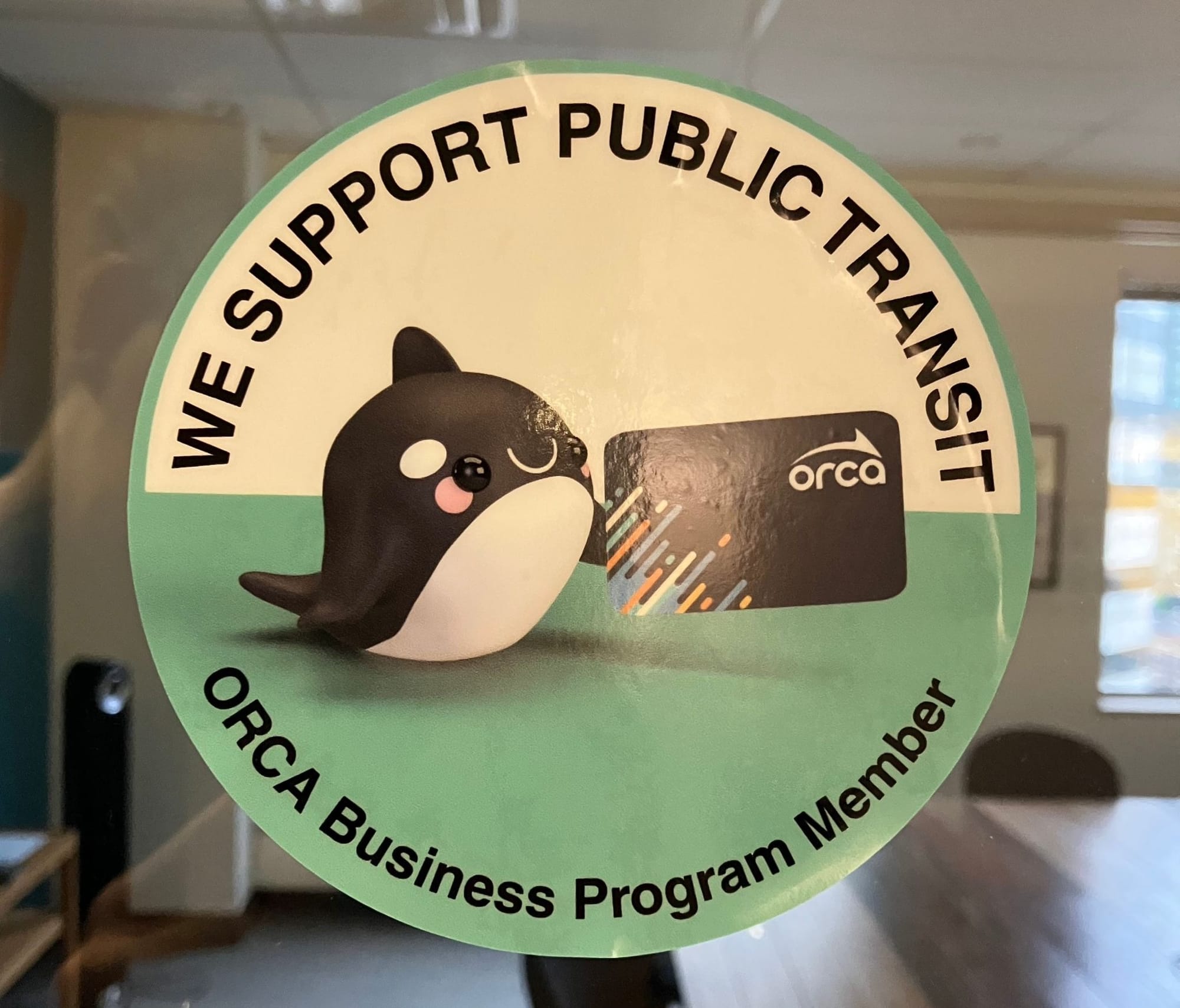
Employers who participate in the ORCA Business Passport Program purchase unlimited transit passes at a discounted rate, with the caveat that they purchase them for all employees. It’s a win-win: regional transit providers get guaranteed, up-front income and can offer a lower rate because not all participating employees will use their passes. And for employees, they get full access to Seattle’s great public transit at no marginal cost - something worth its weight in gold.
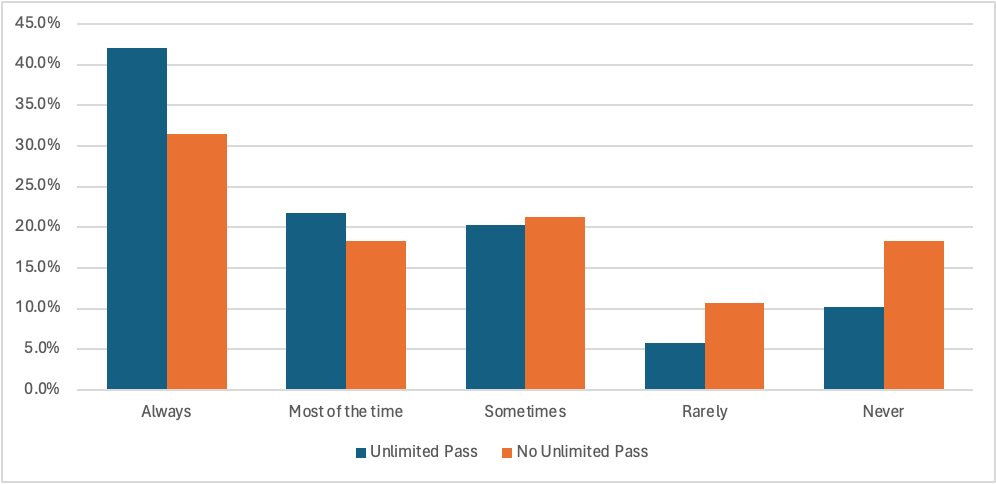
In our survey, we found that 65% of people who have an unlimited transit pass end up commuting by transit at least most of the time, compared to 50% for those who do not. And testimonials from riders paint a picture of a resource that links them to their families and friends, eases financial worries, and encourages them to ride more often.
In addition to the ORCA Business Passport Program, the Seattle region has a best-in-class low-income fare program in ORCA LIFT. While there are still some barriers and issues for low-income riders region-wide, the $1 fare available to those who make less than 200% of the federal poverty line is an invaluable resource that reduces financial burdens for transit riders regionwide.
Barriers to access
While our survey found that access to employer-provided benefits improves transit ridership and quality of life, we also identified serious gaps in how usable the transit system is for people in the Seattle area. These gaps are no surprise to advocates and transit riders: buses and trains that don’t come frequently enough, missing routes that make getting to certain places impossible, and pitiful travel times relative to driving. As good as transit is in Seattle relative to other places in the U.S., we need more service and faster travel times.
It’s key to note that poorer survey respondents were most likely to use transit to get to work. This is no surprise, since it costs an average of $12,000 per year to own and operate a car. If you don’t have a car, you don’t have another choice. The slow routes that don’t come enough impose a burden on everyone who doesn’t drive - those who are too young, those who have aged out of driving, those who choose not to, and those who can’t afford to. And crucially, our report analyzed transit habits at three tranches of income, as shown below, illustrating that dynamic of transit dependency rising at lower income levels.
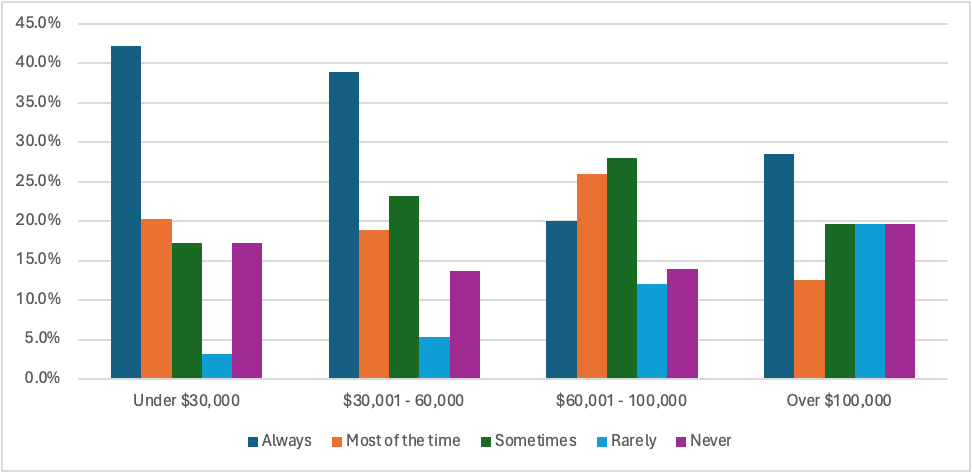
Transit commute choices are not substantially different between those who earn less than $30,000 per year and those who earn between $30,000 and $60,000. However, transit usage sees a notable dip for those who earn between $60,000 and $100,000. Interestingly, those who earn over $100,000 per year reported always commuting on transit more than those who earn between $60,000 and $100,000 - perhaps a reflection of the high concentration of high paying jobs in transit-rich downtowns of Seattle and Bellevue.
There are two key takeaways here. The first is that low-middle income residents surveyed likely earn too much to qualify for ORCA LIFT, despite their demonstrable commitment to using public transit. The second is that middle-income riders (those who earn between $60,000 to $100,000) potentially miss out on being able to ride public transportation to work by virtue of middle-wage jobs being dispersed more broadly throughout the region.
Closing these barriers requires more service, but providing broader access to lower-cost options can go a long way to alleviating welfare cliffs and ensuring everyone who wants to ride transit can.
What’s missing and how to fix it
While the Transit Riders Union played a major role in getting ORCA LIFT in the first place, our region’s extremely high income and soaring income inequality presents a clear issue: there are a lot of people who functionally live in poverty, but who do not meet the current criteria laid out by the ORCA LIFT program of 200% of the federal poverty line or less. Of large metropolitan areas in the US, Seattle has the third-lowest share of those who earn less than $35,000 per year (about 200% of the federal poverty line).
If we tied our low-income fare program to the other common indicator of area median income (AMI), our system would do a better job of meeting its stated goal of providing lower fares for those with lower incomes.
In addition, while the ORCA Business Passport program works well for those who have it and provides key revenue for local agencies, it’s yet another example of a social benefit explicitly tied to employment. Those who do not have jobs, are self-employed, work as independent contractors or term-limited contingency workers, or who work for small companies that do not participate in the program are typically left without a way to purchase discounted fares.
For frequent transit riders without a work-provided pass, their only option is to purchase the $108/month ($1,296/year) monthly pass. This is both a significant cost burden for many residents and more than 25 times the highest zoned street parking rate charged in the City of Seattle ($96/two years, or $48/year).
We commend the current system as a means to induce more commuters on transit, but believe it should be expanded to nonprofits, community groups, unions, and other entities that may want to purchase transit fares in bulk for their members. While further study for what the right rate would be to match usage with a fair fare price for non-employers, we believe getting unlimited ride passes into the hands of more Seattle area residents is a no-brainer.
Even though Seattle has been a place where transit measures have passed 80-20 in the past, this support requires a social base of transit riders. Our data shows that folks with unlimited passes use transit more often to get to work, and thus make up a disproportionate share of the likely voters for transit funding.
This fall, Seattle is set to decide whether we want to up our sales tax by 0.15% to support more frequent service – especially outside of peak hours. While the regressivity of sales taxes is well known, we also have to recognize that, absent state intervention, our transit agencies and local benefit districts cannot support transit any other way. The City anticipates that the full 0.3% measure will bring in around $120 million per year, meaning that the 0.15% increase represents $29 in additional tax burden for the median income two-person household, making $121,000 annually.
This additional burden is why the existing affordability measures in Mayor Katie Wilson’s proposal are vital. But we can and must do more than just the narrow expansion of the Transit Access Programs that fund no-cost transit for certain Seattle residents if we want our city and region to be places where everyone can get around. Expanding access to lower cost fares by expanding ORCA LIFT and opening the ORCA Business Passport more than just employers is a way to offset the additional burden the Seattle Transit Measure renewal will have.
But above all else, we need more transit service. Too many riders are out waiting in the rain for a bus that only comes every 30 minutes due to a lack of funding or are forced to make their plans around when the first or last bus or train comes. Surely the scores of bartenders, servers, bouncers, and other service industry workers working late in nightlife centers like Capitol Hill and Belltown deserve to have the same access to public transportation that a white collar worker in a downtown office gets. The proposed service increases outlined in the mayor’s proposal will go a long way to making that world a reality. Let’s work together to make it happen.
Andrew Lindstrom (he/him) served as a report author for this project. He was born in Wisconsin and has been in the Pacific Northwest since 2021. He is a TRU member and helps out with the endorsement committee. Outside of his activities with TRU, Andrew writes about whatever strikes his fancy on his blog (www.city-hikes.com) in between movie nights at local independent cinemas and transit-oriented adventures.
Tim Marshall (any pronouns) served as data analyst on this project. Tim was born in Burien and has lived in many transit-centric neighborhoods in Seattle, currently in Capitol Hill. Tim has volunteered with TRU in some capacity since 2017 and is proud to see its influence represented in local public office. In addition to transit advocacy, Tim loves makeup artistry, treasuring his 3-year-old feline daughter, and karaoke.
 Ryan Packer